Bhang Leaf Benefits: Vijaya Leaf Compounds, Ayurveda & Evidence
Article Summary
Search for bhang leaf benefits and you will find long lists of promises, most of them borrowed from studies on a different part of the plant. The leaf of Cannabis sativa , known in Ayurveda as Vijaya and in everyday Hindi as bhang patta, has its own ...
Search for bhang leaf benefits and you will find long lists of promises, most of them borrowed from studies on a different part of the plant. The leaf of Cannabis sativa, known in Ayurveda as Vijaya and in everyday Hindi as bhang patta, has its own chemistry, its own place in classical texts and its own legal position in India. This guide looks only at the leaf: what it contains, how Ayurveda describes it, what modern research does and does not support, and how to use leaf-based medicines lawfully with a doctor's guidance.
Disclaimer: This article is for informational purposes only and does not constitute medical advice. Always consult a qualified healthcare professional before starting any new supplement or treatment. Cannabis-based products may require a prescription in India under NDPS Act regulations. Book a consultation with our panel doctors for personalized guidance.
If you are looking for what bhang feels like and how long it lasts, our companion guide on the effects of bhang covers that in detail. Here the focus is narrower and more practical: the leaf, its compounds, and how strong the evidence is for each claimed benefit.
What Is the Bhang Leaf? A Botanical Introduction
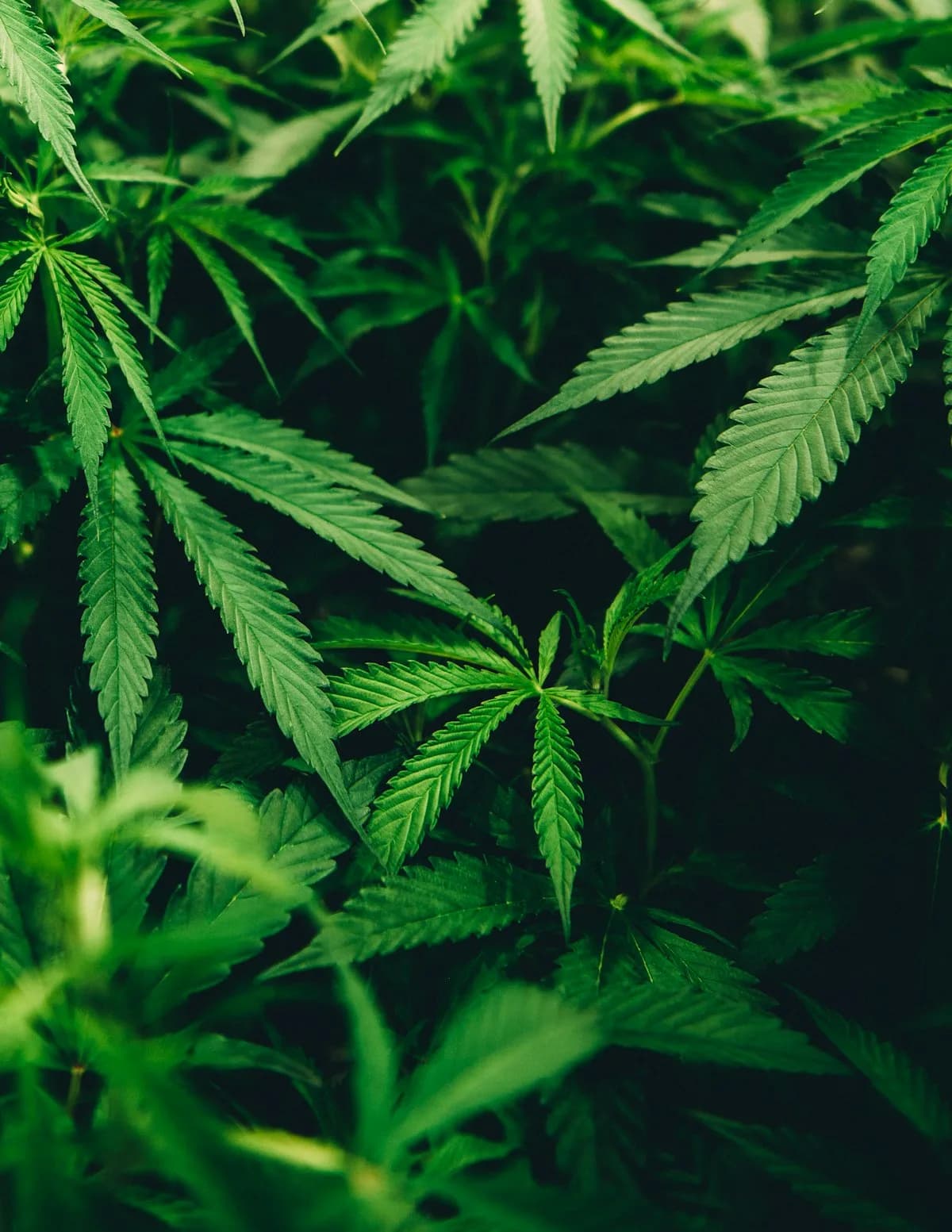
Bhang is the leaf of the cannabis plant. The plant carries its leaves in the familiar hand-shaped pattern, with serrated leaflets radiating from a single stalk. Classical Ayurvedic writing noticed this too: a 2026 pharmacognosy paper from the All India Institute of Ayurveda notes that the text Anandakanda describes Vijaya leaves by their number of leaflets, from one to thirteen.
Two kinds of leaf matter in practice. The large fan leaves do most of the plant's photosynthesis and carry few resin glands. The smaller leaves that grow close to the flowers carry more of the tiny resin glands, called trichomes, where cannabinoids are made. Both are leaves, but they do not have the same strength.
In India the word "bhang" is used for the leaf of both male and female plants, and for the paste and drinks made from it. "Vijaya" is the Sanskrit name used in Ayurvedic medicine. When a product label says "Vijaya leaf extract" or "cannabis leaf extract", it is referring to a preparation made from this part of the plant. Our Vijaya leaf page explains the term in more depth.
Bhang Leaf vs Flowering Tops vs Seed: How the Plant Parts Differ
Most of the confusion around bhang leaves benefits comes from treating the whole plant as one thing. It is not. A study in Scientific Reports (Jin and colleagues, 2020) profiled the flowers, leaves, stem bark and roots of three cannabis varieties and found very different chemistry in each part.
| Feature | Leaf (bhang) | Flowering tops | Seed |
|---|---|---|---|
| Total cannabinoids (Jin et al., 2020) | About 1.1 to 2.1% of dry weight | About 15.8 to 20.4% of dry weight | Not measured in that study; the seed has no resin glands |
| Terpenes | About 0.13 to 0.28% | About 1.28 to 2.14% | Negligible |
| Flavonoids | About 0.34 to 0.44% (highest of any part tested) | About 0.07 to 0.14% | Not a notable source |
| Main nutritional value | Chlorophyll and plant fibre | None of note | Protein and fatty acids |
| Status under the NDPS Act, 1985 | Outside the Act's definition of cannabis when not accompanied by the tops; regulated by state excise law | Inside the definition; controlled | Outside the definition when not accompanied by the tops |
| Typical lawful use in India | Ayurvedic Vijaya medicines; licensed bhang in some states | Not available to consumers | Hemp seed foods and oils |
Two points stand out. First, in that study the leaf held roughly a tenth of the cannabinoids found in the flowers. Second, the leaf was the richest part of the plant for flavonoids. So the leaf is not simply a weaker flower. It is a different raw material.
These figures come from greenhouse-grown, cannabinoid-rich varieties. Wild or field-grown Indian plants can test very differently, which is exactly why standardised medicines exist.
Cannabinoids in the Bhang Leaf: Present, but in Modest Amounts
The leaf does contain THC (the main intoxicating compound) and CBD (which is not intoxicating). The quantity is the issue. The AIIA team mentioned above tested an authenticated sample of Vijaya leaves from Uttarakhand and reported 0.74% THC and 0.77% CBD, along with 1.30% CBDA, the acidic form of CBD.
That last detail matters. In a fresh or simply dried leaf, much of the cannabinoid content sits in acidic forms (THCA and CBDA). These convert to THC and CBD mainly through heat and time. It is one reason the same leaf can behave very differently depending on how it is processed, and why a home preparation is impossible to judge by eye.
Leaf potency also swings with variety, climate and harvest time. A single published sample does not tell you what is in the bhang sold at a local shop.
Cannflavins and Other Flavonoids: The Leaf's Distinctive Compounds
Flavonoids are the plant pigments and protective compounds found in most leaves, fruits and vegetables. In the Jin study, vitexin was the most abundant flavonoid in cannabis leaves, followed by orientin. Both also occur in other plants.
Cannflavins are different. They are prenylated flavonoids that are characteristic of cannabis. Cannflavin A and B were first isolated in the 1980s during a search for compounds that reduce prostaglandin E2, a messenger involved in inflammation. Later laboratory work identified two enzymes, mPGES-1 and 5-lipoxygenase, as their likely targets.
A 2020 scoping review in Fitoterapia (Erridge and colleagues) found that the research on cannflavins is preclinical: cell and laboratory models, not human trials. The same review noted that the low yield of cannflavins from the plant has held research back.
In plain terms, nobody has yet shown that the cannflavins in bhang leaf do anything measurable in a person. They are a reason to keep studying the leaf, not a proven benefit.
Terpenes, Chlorophyll and Fibre in Cannabis Leaves
Terpenes are the aromatic compounds that give the plant its smell. In the leaf, the main ones reported were beta-myrcene, alpha-pinene and beta-caryophyllene, at roughly a tenth of the level found in the flowers. Claims that specific terpenes relax or energise people rest largely on laboratory and animal work, and on much higher exposures than a leaf provides.
Chlorophyll is the green pigment in every leaf. It is what makes bhang paste and hemp-leaf tea green. There is no good clinical evidence that chlorophyll from cannabis leaf offers anything that other green leafy foods do not.
The leaf also contains plant fibre, but in the small quantities used in traditional preparations it contributes little. For fibre, protein and fatty acids, the seed foods in the hemp nutrition range are the relevant part of the plant.
Vijaya Leaf Benefits in Ayurveda: How Classical Texts Describe It
Ayurveda does not describe Vijaya as a simple tonic. It is classed among the upavisha, substances of mild toxic potency that are used as medicine only after processing and in a physician's hands.
Its pharmacological profile, as summarised in the 2026 Pharmacognosy Research paper, is:
- Rasa (taste): tikta, or bitter
- Guna (qualities): laghu (light) and tikshna (sharp, penetrating)
- Virya (potency): ushna, or heating
- Vipaka (post-digestive effect): katu, or pungent
The classical synonyms are just as revealing. "Jaya" is linked with its traditional use in diarrhoea, "Tandrakrita" refers to drowsiness, and "Bahuvadini" and "Matulani" point to delirium and intoxication. The texts recorded the unwanted effects alongside the wanted ones.
The same paper reports that roughly 191 classical formulations list cannabis as a major or minor ingredient, across 13 dosage forms and about 29 groups of conditions. In almost all of them Vijaya is one herb among several, combined with digestive spices and other ingredients, and it is always the purified leaf that is specified.
This context is the real meaning of "vijaya leaf benefits ayurveda". The tradition values the leaf mainly for digestive complaints, sleep and discomfort, within compound formulas, at doses set by a vaidya. Our guide to bhang in India traces that history further.
Shodhana: Why Ayurveda Purifies the Vijaya Leaf First
Because Vijaya is an upavisha, classical texts advise that it be used only after shodhana, a purification process. Ayurvedic sources describe more than one method, generally involving washing the leaf thoroughly in water and then processing it with a medium such as cow's milk or ghee.
The traditional purpose is to reduce harsh qualities and make the herb fit for medicine. Whether and how each method changes the cannabinoid profile has not been settled by modern studies, so it is best to treat shodhana as a pharmaceutical step required by the tradition rather than as a guarantee of safety.
For a buyer, the point is simple. A licensed Ayurvedic manufacturer is expected to follow the classical process and pharmacopoeial quality checks, while raw leaf from an unknown source has been through neither. Shodhana is not something to attempt at home.
Bhang Leaf Benefits: What Research Actually Shows, Claim by Claim
Here is the difficulty with almost every list of bhang leaf benefits. The clinical trials that exist were carried out on standardised cannabinoid medicines with a known, measured amount of THC, CBD or both. Very few modern clinical trials have tested the whole leaf or traditional bhang. So the honest question is not "does bhang work?" but "what has been shown for cannabinoids, and how far does that stretch to the leaf?"
| Claimed benefit | Traditional use of the leaf | What research shows | Strength of evidence for the leaf |
|---|---|---|---|
| Digestion and loose stools | A central classical use, in compound formulas | Little modern clinical research on leaf preparations | Traditional only |
| Appetite | Used to kindle appetite | Limited evidence for oral cannabinoids in HIV/AIDS-related weight loss (NASEM, 2017) | Limited and indirect |
| Sleep | Used for sleeplessness; drowsiness is a recorded effect | Small improvement in sleep quality in people with chronic pain (Wang et al., 2021) | Low to moderate, and indirect |
| Physical discomfort | Used internally and in external applications | Small to very small average improvement in chronic pain with non-inhaled cannabinoids (Wang et al., 2021) | Moderate for standardised cannabinoids; indirect for leaf |
| Mood and stress | Associated with cheerfulness in traditional accounts | Limited evidence for CBD in social anxiety; THC can also raise anxiety (NASEM, 2017) | Weak and mixed |
| Inflammation (cannflavins) | Not a classical concept | Laboratory studies only; no human trials (Erridge et al., 2020) | Preclinical only |
None of these rows describes a remedy for a disease. For a wider view of the traditional and clinical picture, see our guide to the benefits of bhang.
Bhang Leaf for Digestion and Appetite
Digestion is where the classical case for the leaf is strongest. The bitter taste, heating potency and "sharp" quality place Vijaya among herbs traditionally used to stimulate digestive fire and to firm up loose stools. Many of the classical formulas that contain it are digestive compounds built around spices.
Modern evidence is thinner. The gut does have cannabinoid receptors, which gives a plausible mechanism, but good clinical trials of Vijaya leaf formulations for digestive complaints are lacking.
On appetite, the National Academies of Sciences, Engineering, and Medicine reviewed the field in 2017 and found only limited evidence that oral cannabinoids increase appetite and reduce weight loss, and that was in people with HIV/AIDS. It would be a stretch to apply that to a healthy person with a poor appetite.
Persistent digestive symptoms, weight loss, blood in the stool or ongoing diarrhoea need a medical examination, not a home remedy. If you want to explore a traditional digestive formulation, do it through a consultation with an Ayurvedic doctor who can check what else might be going on. The Ayurvedic and herbal collection shows the kinds of formulations available.
Vijaya Leaf for Sleep, Discomfort and Mood: Reading the Evidence
Sleep. Ayurveda records drowsiness as an effect of Vijaya, and sleeplessness as a traditional use. In modern trials, a 2021 systematic review in The BMJ (Wang and colleagues) pooled 32 randomised trials with 5,174 adults and found a small improvement in sleep quality among people taking non-inhaled cannabinoids for chronic pain. That is a real but modest effect, measured in people whose sleep was disturbed by pain. It does not show that the leaf helps ordinary insomnia. Products made for this purpose are grouped under Vijaya for sleep.
Discomfort. The same BMJ review found that cannabinoids produced a small to very small increase in the number of people reporting meaningful improvement in pain and physical functioning. Averaged across patients, the difference from placebo was about half a point on a ten-point scale. Some people respond well and many do not. The Vijaya for pain collection lists doctor-prescribed options, which are meant to sit alongside, never in place of, treatment you have already been prescribed.
Mood. This is the weakest area. Traditional accounts link bhang with cheerfulness, and there is limited evidence that CBD may ease anxiety in social anxiety disorder. But THC can cause anxiety, restlessness and low mood in some people, especially at higher intakes. Anyone with a history of mental illness should be particularly cautious. Our article on the clinical effects of bhang on mind and body explains why responses vary so widely from person to person.
Cannabis Leaf Uses in India: Bhang Paste, Vijaya Leaf Extract and Hemp-Leaf Tea
Three very different products are made from the same leaf. They should not be confused.
Traditional bhang paste and thandai
This is the form most people know: leaves ground into a paste and mixed into milk-based drinks or sweets, usually around Holi and Mahashivratri. Fat in the milk helps carry cannabinoids, which do not dissolve well in water.
The drawback is unpredictability. Strength varies from batch to batch, nothing is labelled, and effects arrive slowly. Traditional bhang is a cultural practice, not a measured medicine. Whether it is lawful depends on your state, as our state-by-state bhang law guide explains.
Standardised Vijaya leaf extract medicines
These are Ayurvedic proprietary or classical medicines made by AYUSH-licensed manufacturers. The leaf is processed, extracted and adjusted so that each unit carries a stated amount. They come as oils, pastes, tablets, capsules and gummies, and are dispensed against a prescription.
The advantages are a known strength, quality testing and medical supervision. The main vijaya leaf extract uses a doctor may consider are support for sleep, long-standing discomfort and appetite, as an addition to standard care. Our Vijaya extract science and buyer's guide covers how these medicines are made, and the comparison of Vijaya oil versus gummies looks at formats.
Hemp-leaf teas
Hemp-leaf tea is made from the leaves of low-THC industrial hemp. Because cannabinoids dissolve poorly in water and sit largely in their acidic forms in dried leaf, a plain water infusion is generally expected to carry very little of them. What it does carry is aroma, some flavonoids and a mild bitter taste.
Treat it as a herbal beverage rather than a medicine. If that is what you are after, the herbal tea collection is the place to look.
Bhang patta ke fayde: a note on what the phrase leaves out
Searches for "bhang patta ke fayde" usually return home remedies passed down through families. Some reflect genuine classical uses. What they leave out is the purification step, the compound formula and the physician who set the dose.
Vijaya Leaf Extract Uses: Six Leaf-Based and Ayurvedic Products to Discuss With Your Doctor
The products below are listed on THC Store and fit the theme of this article. Descriptions are based on the product names only. Check each product page for the full label, and ask a doctor which, if any, is suitable for you. Cannabis-based items may need a valid prescription before they can be dispatched.
- Cannaronil Syringe - Cannabis Leaf Extract - 5000MG/5GM by Cannazo India (₹5,499): a concentrated cannabis leaf extract supplied in a syringe, labelled at 5000 mg in 5 g. A product of this strength should only be used as directed by a prescribing doctor.
- Cannabis Leaf Extract, 5 grams, by MEDICANN (₹2,150): a cannabis leaf extract in a 5 gram pack from Medicann.
- Namaste Organics Sleep Rite Tablets (₹2,500): a tablet-format product from the Vijaya and medical cannabis range, positioned by its name for sleep support.
- Medicann Gut Healing & Cleansing Kit (₹3,010): a kit from Medicann that is positioned by its name for digestive wellness.
- Sanan Bilwadi Churan Tablet 500mg (₹299): an Ayurvedic churan in 500 mg tablet form, sold in packs of 10 or 30 tablets.
- Namaste Organics Pain Away - Topical Oil (₹3,000): a topical oil for external application from the Vijaya and medical cannabis range.
For the complete range, browse the Vijaya and medical cannabis collection. Prices are in Indian rupees and may change, so confirm on the product page.
Bhang Leaf Side Effects and Who Should Avoid It
A lower cannabinoid content does not make the leaf harmless. Swallowed preparations act slowly and last for hours, so it is easy to take more than intended.
In the BMJ review, people taking non-inhaled cannabinoids reported more dizziness, drowsiness, nausea and impaired attention than those on placebo. Dry mouth, a fast heartbeat, a drop in blood pressure on standing, anxiety and confusion are also commonly described.
The following groups should avoid bhang and Vijaya leaf preparations unless a doctor who knows their history specifically advises otherwise:
- Pregnant and breastfeeding women. The 2017 National Academies report found an association between cannabis smoking in pregnancy and lower birth weight. No form is considered safe in pregnancy.
- Anyone under 18. The developing brain is more vulnerable to THC.
- People with heart conditions. THC can raise heart rate and alter blood pressure, which may be risky with heart disease or rhythm problems.
- People with a personal or family history of psychosis, schizophrenia or bipolar disorder. The National Academies report found substantial evidence linking cannabis use with the development of psychotic illness, with greater risk at heavier use.
- People taking regular medicines. Cannabinoids are processed by the same liver enzymes as many common drugs. Blood thinners, anti-epileptic medicines, sedatives, sleeping tablets and some antidepressants are among those that call for extra care. Alcohol adds to the sedation.
- Anyone who needs to drive or operate machinery. Cannabis use is associated with a higher risk of road crashes. Do not drive after taking any THC-containing preparation.
- People with a history of substance dependence, and those with significant liver or kidney disease.
If you feel unwell after a leaf preparation, stop, stay with someone you trust, and seek medical care for chest pain, fainting, severe vomiting or marked confusion. Our Vijaya leaf extract side effects guide goes through this in more detail.
We deliberately give no doses here. Safe amounts depend on the preparation, your body and your medicines. The bhang dosage guide explains how doctors think about dosing, and the right starting point for you should come from a doctor consultation.
Is the Bhang Leaf Legal in India? NDPS Act, State Rules and Schedule E-1
The legal position of the leaf rests on a definition. The Narcotic Drugs and Psychotropic Substances Act, 1985 defines cannabis as the resin and the flowering or fruiting tops of the plant, and it expressly excludes the seeds and leaves when they are not accompanied by the tops.
That exclusion is why bhang sits outside the central Act's definition. It does not make bhang unregulated. States control the cultivation, sale and possession of bhang through their own excise laws, and the rules differ widely. Some states license bhang shops. Others prohibit it altogether.
Medicines are governed separately. Vijaya is listed in Schedule E-1 of the Drugs and Cosmetics Rules, 1945, the list of substances that Ayurvedic, Siddha and Unani medicines may contain only under specific safeguards. Medicines for internal use that contain a Schedule E-1 ingredient must carry the caution that they are to be taken under medical supervision, and a 2022 advisory from the Central Consumer Protection Authority asks online sellers to dispense them only against a valid prescription.
The practical summary: leaf-based Vijaya medicines made by AYUSH-licensed manufacturers and sold against a prescription are a lawful route across India. Loose leaf and bhang depend on your state's law. Our article on whether Vijaya extract is available in medical stores explains where these medicines can be bought.
How to Access Vijaya Leaf Medicines Legally With a Doctor
- Write down your concern and your medicines. List your symptoms, how long you have had them, and every medicine and supplement you take.
- Book a consultation. A registered practitioner reviews your history and decides whether a Vijaya leaf medicine is appropriate. Many people are advised to try other approaches first.
- Receive a prescription if suitable. It specifies the product, the strength and how to take it.
- Order from a licensed seller. Check that the product names its manufacturer, its AYUSH licence and its batch details.
- Follow up. Report how you are doing and any side effects, so the plan can be adjusted or stopped.
You can book a doctor consultation through THC Store. To read more before you decide, the learning hub and the full blog library cover Vijaya, hemp and CBD in plain language.
Frequently Asked Questions About Bhang Leaf Benefits
What are the main bhang leaf benefits according to Ayurveda?
Classical Ayurveda uses purified Vijaya leaf mainly within compound formulas for digestive complaints, poor appetite, sleeplessness and discomfort. It also classes the leaf as an upavisha, to be used only after shodhana and under a physician's direction. These are traditional uses, not proven medical outcomes.
Is the bhang leaf weaker than the flowering tops?
Yes, in general. In one detailed analysis the leaves held about 1.1 to 2.1% cannabinoids against roughly 15.8 to 20.4% in the flowers. But "weaker" is not the same as "mild". Leaf strength varies a great deal, and swallowed preparations act slowly and last for hours.
Do bhang leaves contain CBD?
They can. One authenticated Indian sample of Vijaya leaves contained 0.77% CBD and 1.30% CBDA alongside 0.74% THC. The ratio depends on the plant variety, so it cannot be assumed for any given batch. People who specifically want CBD usually choose measured products from the CBD products collection.
Is bhang leaf good for digestion?
Digestion is the leaf's best-known traditional use, and many classical digestive formulas include purified Vijaya. Modern clinical trials of leaf preparations for digestion are lacking, so the support is traditional rather than clinical. Ongoing digestive symptoms should be assessed by a doctor.
Can I eat or juice raw bhang leaves?
We do not recommend self-preparing raw leaf. Ayurveda itself does not use the unprocessed leaf, the cannabinoid content of loose leaf is unknown, and possession of raw leaf is governed by state law. A standardised medicine prescribed by a doctor is the safer and clearer route.
What is the difference between bhang and Vijaya leaf extract?
Bhang is the leaf and the traditional paste or drink made from it, with no fixed strength. Vijaya leaf extract is a manufactured Ayurvedic medicine with a stated cannabinoid content, quality testing and a prescription requirement. Our guide to the Ayurvedic and clinical effects of bhang explains how the two feel different in practice.
Do I need a prescription for Vijaya leaf medicines in India?
For medicines containing Vijaya, yes. They fall under Schedule E-1 and are meant to be taken under medical supervision. You can obtain a prescription through a consultation with a panel doctor, and read more about the plant on our Vijaya leaf page.
The Bottom Line on Bhang Leaves Benefits
The bhang leaf is a distinct part of the cannabis plant: lower in cannabinoids than the flowering tops, richer in flavonoids, and outside the NDPS Act's definition of cannabis. Ayurveda values it for digestion, sleep and discomfort, but only after purification and inside compound formulas.
Modern research offers modest support for standardised cannabinoids in chronic pain and pain-related sleep problems, limited support for appetite, and only laboratory findings for the leaf's distinctive cannflavins. The leaf itself remains under-studied. The sensible approach is to choose a standardised product, involve a doctor, and keep your existing treatment in place unless your doctor advises a change.
Sources & References
- Jin D, Dai K, Xie Z, Chen J. Secondary metabolites profiled in cannabis inflorescences, leaves, stem barks, and roots for medicinal purposes. Scientific Reports. 2020;10:3309. https://doi.org/10.1038/s41598-020-60172-6
- Varshney S, Deogade MS, Singh D, Singh M, Manchanda RK, Nesari TM. Decoding Vijaya (Cannabis sativa L.) leaves: a comprehensive analysis through pharmacognosy, physicochemical profiling and advanced analytical techniques. Pharmacognosy Research. 2026;18(1):153-162. https://doi.org/10.5530/pres.20262239
- Wang L, Hong PJ, May C, et al. Medical cannabis or cannabinoids for chronic non-cancer and cancer related pain: a systematic review and meta-analysis of randomised clinical trials. BMJ. 2021;374:n1034. https://doi.org/10.1136/bmj.n1034
- Erridge S, Mangal N, Salazar O, Pacchetti B, Sodergren MH. Cannflavins - from plant to patient: a scoping review. Fitoterapia. 2020;146:104712. https://pubmed.ncbi.nlm.nih.gov/32858172/
- National Academies of Sciences, Engineering, and Medicine. The Health Effects of Cannabis and Cannabinoids: The Current State of Evidence and Recommendations for Research. Washington, DC: National Academies Press; 2017. https://doi.org/10.17226/24625
Share this article
Written by
THC Store Editorial
Published 12 hours ago