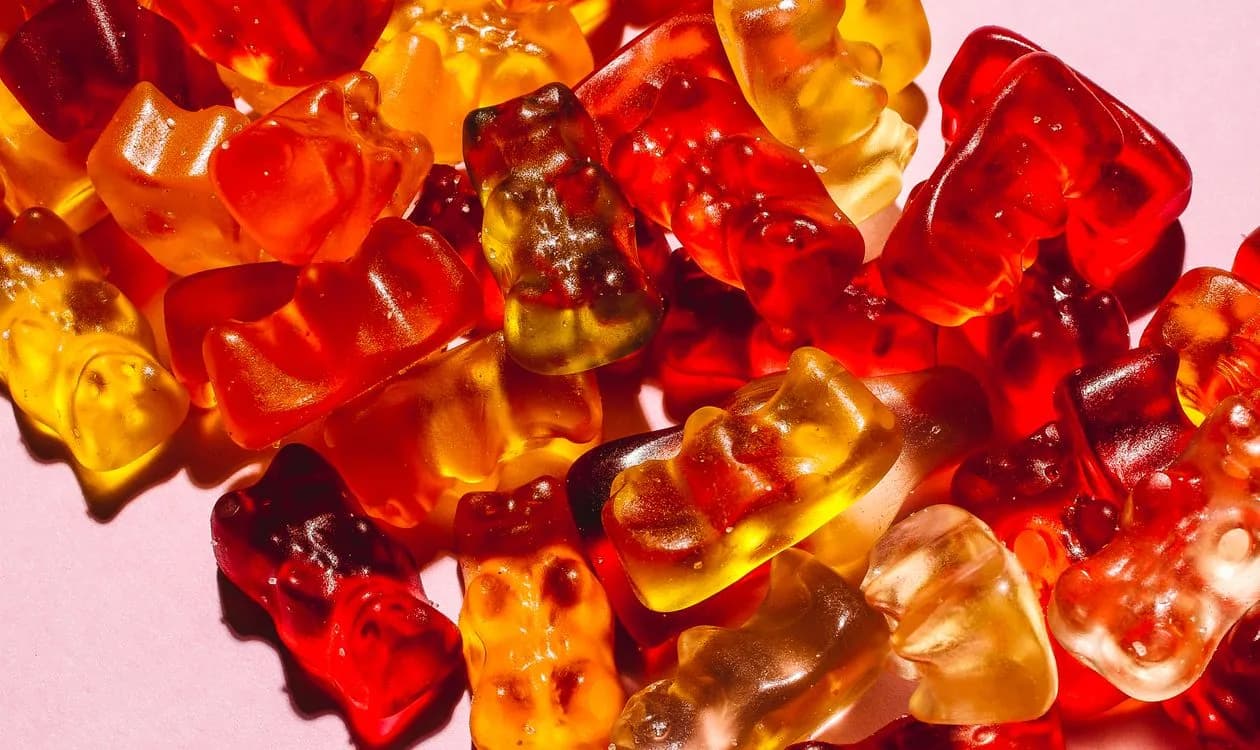
THC Gummies Full Form: What THC Stands For and What It Means
THC Store EditorialPublished November 26, 202617 min read
Article Summary
Three small letters on a sweet's wrapper can decide how the rest of someone's evening goes. THC gummies full form, in plain words: THC stands for tetrahydrocannabinol, the compound in the cannabis plant most linked with changes in thinking, mood and ...
Three small letters on a sweet's wrapper can decide how the rest of someone's evening goes. THC gummies full form, in plain words: THC stands for tetrahydrocannabinol, the compound in the cannabis plant most linked with changes in thinking, mood and coordination, and a THC gummy is a chewable sweet that contains it. The store's edibles collection shows what is listed in this category; this guide explains what the term means.
What a label states and what a gummy does are two separate questions. Indian law reads cannabis products against the definitions in Section 2 of the NDPS Act, 1985.[1] Eaten THC also behaves differently from inhaled THC: in a controlled study of healthy adults who rarely use cannabis, the effects of oral cannabis were considerably delayed.[2]
Disclaimer: This article is for informational purposes only and does not constitute medical advice. Always consult a qualified healthcare professional before starting any new supplement or treatment. Cannabis-based products may require a prescription in India under NDPS Act regulations. Book a consultation with our panel doctors for personalized guidance.
THC gummies full form: what THC stands for
THC stands for tetrahydrocannabinol, and THC gummies are chewable sweets that contain it. The long chemical name breaks into parts a reader can follow: "tetrahydro" describes how the molecule is built, and "cannabinol" points back to the cannabis plant that makes it. When a gummy label prints the three letters, it is telling you that this compound is one of the active ingredients.
A THC gummy is different from two other gummies that often sit beside it. A hemp seed gummy is a sweet made with seeds, seed oil or seed protein, which are food ingredients. A CBD gummy carries cannabidiol, another compound from the same plant, without THC as the stated active ingredient. The three terms are not interchangeable, and a pack that blurs them deserves a closer look.
What is THC, and where does it come from in the cannabis plant?
THC is one of many cannabinoids, the family of compounds that cannabis plants make, and it is the one most linked with changes in thinking, mood and coordination. Indian law starts from the plant itself: Section 2 of the NDPS Act, 1985 defines a cannabis plant as any plant of the genus cannabis.[1] That definition covers plants grown for fibre and seed as well as plants grown for their flowers.
The full chemical name, tetrahydrocannabinol, covers a few closely related forms of the molecule. Chemists write the usual one as Δ9-THC, or delta-9-THC, and a recent global review of cannabis-derived food products uses that name for the THC found in edibles.[3] When a gummy label simply says THC, this is nearly always the form meant. Other forms are sometimes sold under their own names, and a label that adds an unfamiliar prefix is telling you the product contains something other than the usual compound.
THC is not spread evenly through the plant. It is concentrated in the sticky resin of the flowering tops, produced by tiny hair-like glands on the flowers and the small leaves around them. The larger leaves carry less, the stalks very little, and the seeds have almost none of their own; any THC found on seeds usually comes from contact with the flowers during harvest. This is why a product made from seed is a very different thing from one made from flower or from a concentrated extract.
The same plant also makes cannabidiol, known as CBD. CBD and THC are different molecules with different effects. CBD is not associated with the same changes in thinking and coordination, which is why the two terms on a label point to very different products, even when both come from cannabis.
What does 'THC' mean when it is on a gummy label?
On a gummy label, THC usually appears as an amount in milligrams (mg), either per piece or per pack, and the first thing to settle is which one you are reading. A total for the whole pack, divided across many pieces, means each piece holds only a share of the headline number. A per-piece amount tells you what a single gummy contains. A label that gives only one of the two, without the number of pieces, leaves the reader to guess, and guessing is the wrong way to approach an edible.
The label should also say where the THC comes from. The common sources are:
- a plant extract, made by drawing the compounds out of the flowers or leaves with a solvent such as ethanol, or with carbon dioxide under pressure;
- a distillate, which is an extract refined further so that it is mostly a single compound;
- an infused oil or butter, where plant material has been heated in fat so that the compounds pass into it.
A vague line such as "cannabis extract" with no amount and no plant part is a reason to ask the seller for more detail before trusting the pack.
The words on the front of a gummy pack are not interchangeable. "Hemp", "hemp seed" and "CBD" each describe something different from "THC". A pack that says only "hemp" may mean seed, seed oil, leaf extract or flower extract, so the ingredient list matters more than the brand name or the picture of a leaf.
How THC behaves when you eat it instead of inhaling it
Eaten THC takes a slower and longer route through the body than inhaled THC, which changes both when the effect starts and how long it lasts. When THC is inhaled, it enters the blood through the lungs very quickly. When it is swallowed in a gummy, it passes through the stomach and gut and then through the liver before reaching the rest of the body, and the liver changes part of it on that first pass.
A recent review of cannabis-derived food products describes oral Δ9-THC as having delayed onset, prolonged effects, first-pass metabolism in the liver, the formation of an active compound called 11-hydroxy-THC, and high variation between individuals.[3] In plain words, the liver turns some of the THC into a second compound that is also active, so the effect of a gummy is not simply a slower copy of the effect of inhaling.
A controlled study in healthy adults who rarely use cannabis compared eaten and inhaled cannabis directly.[2] The researchers reported that inhaled cannabis acts almost immediately, while the effects of oral cannabis were considerably delayed.[2]
The practical meaning is simple. The feeling from a gummy can arrive late, sometimes long after a person has stopped waiting for it, and it can last well into the night or the next morning. The usual story behind a bad experience with an edible is a person who felt nothing, took a second gummy, and then felt both at once. Patience is the main safety habit with any eaten cannabis product, and it is the one a sweet taste makes easiest to forget.
Why the same gummy affects two people differently
The same gummy affects two people differently because the amount of THC the body absorbs from an eaten product varies a great deal from one person to the next. A systematic review, a study that gathers and compares the suitable research on one question, looked at oral THC and found high variability in how much THC is absorbed from oral products, with peak blood levels arriving later than with other routes.[4]
Several everyday factors plausibly play a part, though no label can account for them:
- body size, and how quickly a person's liver handles THC;
- whether the gummy is eaten on an empty stomach or after a meal, especially a rich one;
- how often the person uses cannabis, since regular users tend to feel less from the same amount;
- other medicines taken at the same time, some of which are processed by the same liver enzymes;
- alcohol, which has its own section below.
The same review warns that this variable absorption, together with the delayed onset, can lead to overconsumption of edible preparations, especially among people new to them.[4] A friend's experience with a brand therefore tells you very little about your own.
What the research says about thinking and movement after oral THC
Research in healthy volunteers shows that oral THC at higher amounts clearly impairs thinking and movement. In the controlled study of adults who infrequently use cannabis, oral doses of 25 and 50 mg THC produced pronounced subjective effects and markedly impaired cognitive and psychomotor functioning compared with placebo.[2] Cognitive functioning means tasks such as memory, attention and working things out; psychomotor functioning means tasks that join thinking to movement, such as reacting to a signal or keeping a steady hand.
Those amounts come from a research setting, with healthy adults, measured doses and staff watching over them. They describe what was tested, not an amount anyone should take, and this guide gives no amount for any purpose. Nor do these results show that smaller amounts leave a person unimpaired; that question was simply not answered for every individual.
Driving is the clearest everyday case. A narrative review of controlled studies concluded that cannabis containing THC acutely impairs driving.[5] "Acutely" here means during the period the effect lasts, which with an edible can be long and hard to predict.
The plain rule is not to drive, ride a two-wheeler or operate machinery after eating a THC gummy. Whether THC has any use for a particular health complaint is a separate question, one for a doctor who knows the person's history, and not one this guide tries to answer.
THC gummies and alcohol: why mixing adds up
Mixing a THC gummy with alcohol adds up because the two impair the body together rather than one cancelling the other. The narrative review of controlled driving studies found that combining alcohol with THC produces additive effects that amplify impairment.[5]
The plain advice is not to combine them. The same caution applies to other things that cause drowsiness, such as some cough syrups, allergy tablets and sleeping tablets. Anyone who takes regular medicines should tell a doctor or pharmacist before trying any THC product, since the liver handles many medicines and THC through shared routes.
Gummies also need to be stored like medicines, not like sweets. They look exactly like the confectionery children eat, and the 2026 review of cannabis-derived food products describes the delayed onset and prolonged effects of oral THC as raising the risk of repeated dosing and of accidental exposure in children.[3] Keep gummies in their original, labelled pack, in a closed cupboard out of children's reach. Pets need the same care: dogs in particular will eat anything sweet they find, and a vet should be called at once if a pet eats a gummy.
How the NDPS Act's own words frame cannabis edibles
The NDPS Act does not mention gummies, but its wording on mixtures and extracts is how a cannabis edible is read against the law.[1] The Narcotic Drugs and Psychotropic Substances Act, 1985, usually called the NDPS Act, sets out its key terms in Section 2.[1]
Several of those definitions matter for a THC gummy:
- Cannabis plant: any plant of the genus cannabis.[1]
- Ganja: the flowering or fruiting tops of the cannabis plant, excluding the seeds and leaves when they are not accompanied by the tops.[1]
- Mixtures: the definition of cannabis (hemp) also covers any mixture, with or without any neutral material, of its forms, or any drink prepared from them.[1]
- Medicinal cannabis: also called medicinal hemp, defined as any extract or tincture of cannabis (hemp).[1]
The mixture wording is the part to notice. A gummy is sugar, a setting agent and flavour combined with something from the plant, and the Act's definition covers mixtures of cannabis forms with or without neutral material.[1] A gummy made with an extract also sits beside the Act's separate definition of medicinal cannabis as an extract or tincture.[1]
Charas, the separated resin of the plant, is defined on its own. A High Court judgment explains that charas is defined under Section 2(iii)(a) of the NDPS Act as separated resin, whether crude or purified, obtained from the cannabis plant.[6]
These definitions explain how the Act is worded, and that is all they do.[1] They do not tell a reader that any particular gummy is lawful to buy, carry or eat, and they do not settle questions about a specific product's ingredients or its maker's licence. Those depend on facts about the product and, as the next section shows, on the rules of each state.
Why state rules decide what a THC gummy can mean for you
State rules decide much of what a THC gummy can mean for a reader, because the central Act gives states the power to permit and regulate cannabis. Section 10 of the NDPS Act, 1985 lets a State Government, by rules, permit and regulate the cultivation of the cannabis plant and the production, manufacture, possession, transport, inter-State import and export, sale, purchase, consumption and use of cannabis, excluding charas.[7]
The central law sets the frame, and each state's excise law fills in much of the rest. That is why the same product can be handled differently from one state to another, and why no honest seller or writer can promise how a particular gummy will be treated wherever it travels. This guide does not say that any product is lawful in any named state.
Food made from hemp seed is a separate matter from a gummy made with flower or extract. The Act's definition of ganja leaves out seeds that are not accompanied by the flowering or fruiting tops, which is part of why hemp seed foods are handled apart from cannabis extracts.[1] A gummy carrying THC from an extract does not become a hemp seed food just because the word "hemp" is printed on the pack.
Ayurvedic medicines that use cannabis leaf, often sold as Vijaya preparations, are a medicine matter rather than a sweets matter. They are made under a state Ayurvedic manufacturing licence, and a registered Ayurvedic practitioner is the person to ask about them. For the medicine side of the question, read whether prescription THC medicine is legal in India, and for the non-THC side, what the NDPS Act text says about CBD oil.
Last reviewed: 26 November 2026. General information, not legal advice.
THC compared with CBD and the other terms on a gummy label
THC, CBD and the other words printed on gummy packs describe different things, and the table below sets the common ones side by side.
| Term on the label | What it is | Where it comes from in the plant | Would the label give milligrams? | What to check on the pack |
|---|---|---|---|---|
| THC | Tetrahydrocannabinol, the compound most linked with changes in thinking, mood and coordination | Mainly the resin of the flowering tops | Yes, per piece and per pack | Amount per piece, the source of the THC, a batch lab report |
| CBD | Cannabidiol, a different compound from the same plant | Flowers and leaves, through extraction | Yes, per piece and per pack | Whether THC is also present, and how much |
| Hemp seed oil | A food oil pressed from the seed | The seed | Usually not, as it is a food oil | That it is seed oil, not an extract sold under a hemp name |
| Vijaya or cannabis extract | A traditional Ayurvedic name for cannabis, or a general extract of the plant | Leaves, flowers or both, depending on the maker | It should, though many packs do not | Maker's name, licence number and the plant part used |
| Full-spectrum or broad-spectrum | A description of how much of the plant's mix of compounds an extract keeps | A whole-plant extract | Not by itself; the THC amount must be listed separately | The actual THC and CBD amounts on the batch report |
Words such as "nano", "infused" and "Vijaya" are descriptions chosen by makers. "Nano" refers to breaking an extract into very small droplets, "infused" means the compounds were carried into a fat or oil, and "Vijaya" is a traditional name. None of them, by itself, proves what the gummy contains or how it is regulated. The background to the Ayurvedic name is set out in our guide to Vijaya extract in Ayurvedic medicine.
The difference between seed oil and CBD oil confuses many buyers, and this explainer on hemp oil versus CBD oil covers it in detail. Readers who would rather avoid THC altogether can compare labels in the CBD products range or among the oils in the CBD oil collection, using the same checks described below.
What to check on a gummy label before you trust it
A gummy label earns trust when it states the cannabinoid amounts, names its maker and matches an independent lab report for the same batch. Read the pack in this order:
- The amounts. Look for THC and CBD in milligrams per piece, the number of pieces in the pack, and whether any headline figure is per piece or per pack.
- The batch number. Every pack should carry a batch or lot number and a manufacturing or expiry date.
- The maker and licence. A named manufacturer with an address should appear on the pack. When a product is sold as an Ayurvedic preparation, look for the state Ayurvedic manufacturing licence number it is made under. A logo or slogan suggesting official blessing is not a licence number.
- The lab report. Ask the seller for a certificate of analysis, a lab report that lists what a batch contains, from an independent laboratory. Check that the batch number on the report matches the one on your pack and that the THC and CBD figures match the label.
- The ingredient list. Check the sweetener, whether the setting agent is gelatin (from animals) or pectin (from fruit), and any allergens. This matters to vegetarians and to anyone with a food allergy.
- The claims. Be wary of a pack that promises to fix a health problem or describes the product as harmless for everyone. No honest label can say either.
Label accuracy is a real concern with gummies of every kind, and our post on how closely gummy labels match their contents covers what that looks like in practice. With this checklist in hand, the edibles range and the Ayurvedic and herbal collection can be read pack by pack, asking for the batch report whenever it is not shown.
Common mistakes people make with THC gummies
Most bad experiences with THC gummies come from a handful of predictable mistakes, nearly all of them about timing and assumptions rather than the gummy itself.
- Taking a second gummy because nothing has happened yet. A controlled study found the effects of oral cannabis were considerably delayed compared with inhaled cannabis.[2] Feeling nothing early on is expected, not a sign the gummy failed.
- Assuming all gummies of the same size are the same strength. The THC amount depends on the recipe, not the size or shape, and a systematic review notes that variable absorption and delayed onset can lead to overconsumption of edibles, especially among new users.[4]
- Mixing with alcohol or driving the same day. A review of controlled studies found alcohol and THC have additive effects that amplify impairment.[5] Plan the day so that no driving is needed.
- Leaving gummies within reach. They look like ordinary sweets to children, guests and pets. A labelled pack in a closed cupboard is the minimum.
- Treating the label as medical advice. A pack can describe what is in it; it cannot tell you whether it suits you. For a health question, the right people to ask are a doctor or a registered Ayurvedic practitioner.
When to talk to a doctor first, and what is not known
Talking to a doctor before trying any THC product makes sense for anyone who takes regular medicines, is pregnant or breastfeeding, has a personal or family history of mental health problems, or drives or works with machinery. Those are the situations where the delayed and variable effects described above carry the most weight. A short consultation with a doctor is the place to raise medicines, health history and whether any cannabis product is a sensible idea at all.
This guide does not claim that any gummy helps with any health condition, and it gives no amount for any purpose. The figures quoted here describe what was measured, not advice.
Some things are simply not known for the person reading this:
- How much THC a particular gummy will release into a particular person's blood. Oral absorption varies widely between people, as the systematic review of oral THC studies describes.[4]
- How any specific Indian brand's gummy compares with the products used in the research.
- Whether a pack's label is accurate, unless an independent lab report for that batch says so.
?Frequently Asked Questions
What is the full form of THC?
Is THC the same as CBD in a gummy?
How long does a THC gummy take to work?
Can you drive after eating a THC gummy?
Is it safe to have a THC gummy with alcohol?
Do hemp seed gummies contain THC?
Why do THC gummies affect people differently?
Sources
Share this article
Written by
THC Store Editorial
Published 1 hours ago