Is CBD Oil Legal in India? What the NDPS Act and States Say
THC Store EditorialPublished November 26, 202617 min read
Article Summary
Is CBD oil legal in India? There is no single yes or no, because the central NDPS Act, 1985 does not name CBD at all, and Section 10 of that Act leaves State Governments to permit and regulate the production, possession, transport, sale and use of ca...
Is CBD oil legal in India? There is no single yes or no, because the central NDPS Act, 1985 does not name CBD at all, and Section 10 of that Act leaves State Governments to permit and regulate the production, possession, transport, sale and use of cannabis other than charas.[1] You can see what is listed in our CBD oil collection, and this guide explains what the law says and what to check before you rely on any bottle.
The same bottle can sit under different rules depending on what is inside it and which state it ends up in. A label that says "hemp", "full spectrum" or "Ayurvedic" does not settle the question on its own.
Disclaimer: This article is for informational purposes only and does not constitute medical advice. Always consult a qualified healthcare professional before starting any new supplement or treatment. Cannabis-based products may require a prescription in India under NDPS Act regulations. Book a consultation with our panel doctors for personalized guidance.
Is CBD oil legal in India? The short answer
CBD oil is neither banned by name nor cleared by name in India; its position depends on where the CBD comes from and on the rules of the state involved. CBD, short for cannabidiol, is one of the many compounds found in the cannabis plant. A CBD oil is usually an extract of that compound mixed into a carrier oil, such as hemp seed oil or coconut-derived MCT oil.
The central law regulates the plant by its parts and forms. Its definition of ganja covers the flowering or fruiting tops and excludes seeds and leaves when they are not accompanied by the tops.[2] Its definition of charas covers the separated resin, including concentrated preparations.[2] State Governments may, by rules, permit and regulate the cultivation, production, possession, transport, sale, purchase and use of cannabis, excluding charas.[1]
Two further tracks sit beside the narcotics definitions. Hemp seed, hemp seed oil and hemp seed flour are sold in India as foods, under food standards of their own. Ayurvedic medicines that contain cannabis leaf are made and sold under the licensing rules for Ayurvedic medicines. So one product can fall under a different rule from the product listed next to it.
We cannot promise that any product is legal in any named state, and an honest seller will not promise it either. Each state's excise law decides much of what the central law leaves open, so check with the seller and with your own state's rules. What follows is general information that shows the reasoning, so you can judge a product for yourself.
What the NDPS Act actually says about cannabis
The NDPS Act, 1985 regulates cannabis through a set of definitions in Section 2, and none of them uses the word CBD or the phrase "hemp oil".[3] To know where a CBD oil stands, you have to read those definitions and match them against how the oil was made.
Section 2 of the NDPS Act, 1985 defines a cannabis plant as any plant of the genus cannabis.[3] That definition is broad. It does not separate industrial hemp from other varieties of the plant, either by name or by chemical content.
The same section defines cannabis (hemp) as charas, ganja and mixtures of these.[2] Each of the two main terms is defined by plant part and form:
- Ganja means the flowering or fruiting tops of the cannabis plant, excluding the seeds and leaves when they are not accompanied by the tops.[2]
- Charas means the separated resin, crude or purified, obtained from the plant, and includes concentrated preparations known as hashish oil or liquid hashish.[2]
- Mixtures of these two also fall within the definition of cannabis (hemp).[2]
CBD oil is not on this list by name. The legal question for any CBD oil therefore becomes a practical one: which part of the plant was it made from, and by what process? An oil pressed from seeds, an extract made from leaves alone and an extract made from the flowering tops can land in different places, even though all three may be sold as "hemp" products.
Why the source of the CBD decides the legal answer
The source of the CBD decides the legal answer because the central definitions turn on the plant part and the form of the material, not on the name of a compound. Two oils with the same amount of CBD can sit in different categories if one was made from leaves and the other from flowering tops.
Seeds and leaves without the tops
Seeds and leaves sit outside the ganja definition when they are not accompanied by the flowering or fruiting tops.[2] That exclusion is why hemp seed foods are handled differently from flower-derived extracts. A CBD extract made from leaves relies on the same exclusion, which is why a seller should be able to show that the raw material was leaf without tops, and not a mixed plant harvest.
Flowering tops
CBD taken from the flowering or fruiting tops sits closest to the ganja definition, because the tops are the material that definition names.[2] This is the area where a seller's claims need the most scrutiny. Ask directly which plant part was used and where it was grown, and treat a vague answer as a warning.
Resin and concentrated extracts
The charas definition covers separated resin in any form, crude or purified, and concentrated preparations.[2] A highly concentrated extract can be argued to come within that wording, so the extraction route matters as well as the plant part. This is a point on which a lawyer's reading of the specific product can matter more than any general guide.
What label words do and do not tell you
Label words such as "full spectrum", "broad spectrum" and "isolate" describe what is in the oil, not which legal definition applies. Full spectrum usually means the extract keeps a range of plant compounds, which can include small amounts of THC; broad spectrum usually means THC has been removed; isolate means purified CBD on its own. None of these words names the plant part. If the difference between a pressed seed oil and a CBD extract is still unclear, our guide on how hemp oil and CBD oil differ sets the two side by side.
Who decides the rest: Section 10 and state rules
State Governments decide much of what the central definitions leave open, under Section 10 of the NDPS Act, 1985.[1] That section lets them, by rules, permit and regulate the cultivation of any cannabis plant and the production, manufacture, possession, transport, inter-State import and export, sale, purchase, consumption or use of cannabis, excluding charas.[1]
Because each state writes its own rules, two states can handle the same product differently. This is the main reason this post does not say that any product is allowed in a named state: the answer depends on rules we cannot check for every reader's location and every product.
Section 10 of the NDPS Act, 1985 also lets a state provide that only cultivators licensed by the prescribed state authority may grow any cannabis plant.[1] In practice, the raw material behind a CBD oil should trace back to cultivation that a state has permitted, and a careful seller will know where theirs came from.
Section 14 of the NDPS Act, 1985 allows Government, by general or special order, to permit cultivation of the cannabis plant only for obtaining fibre or seed or for horticultural purposes.[4] Industrial hemp grown for fibre and seed sits within this provision, which is different from growing the plant for its flowering tops.[4]
The practical steps for a reader are simple:
- Look up the excise or cannabis rules published by your own state's excise department.
- Ask the seller in writing which rule or licence they rely on, and whether they send products to your state.
- Keep the invoice, the label and any lab report with the product.
What the Union told the Delhi High Court in January 2026
In Great Legalisation Movement India vs Union of India, decided by the Delhi High Court in January 2026, the court recorded the Union government's stated position on cannabis.[4] That record is useful because it shows how the central government reads the law. It is a record of a stated position, not a ruling that CBD oil is legal.
According to the Union's submission as recorded, there is no complete ban on cannabis under the NDPS Act, and it can be used for medical, scientific, industrial and horticultural purposes by taking the requisite permissions from the respective State Governments.[4] The key words are "requisite permissions": the Union's reading points back to the states, not to a free market.
The record also notes the Union's position that, under Section 10, State Governments can permit and regulate cannabis cultivation, sale and use, and that Uttarakhand has allowed cultivation of hemp for industrial purposes.[4] This matches the structure described above: the central law defines, and states permit and license.
The Union further said that bhang, an edible preparation of cannabis, is not controlled under the NDPS Act but by the respective state governments.[4]
Be clear about the limit of this record. A submission explains how one party reads the law; it does not examine any particular CBD oil, its plant source, its THC content or the state it was sold in. Treat it as a guide to how the central law is understood, not as clearance for any bottle on any shelf.
Bhang, state control and why it is a useful comparison
Bhang is a useful comparison because it shows that falling outside the central Act does not mean falling outside all rules. A peer-reviewed commentary in the journal Lung India notes that bhang does not fall within the definition of cannabis (hemp) under Section 2 (iii) of the NDPS Act, 1985, so the Act's provisions for narcotic substances do not apply to it, though state laws still govern it.[5]
Bhang is traditionally prepared from the leaves of the plant and is drunk in some parts of India during festivals such as Holi, often in a milk drink. Its sale runs through shops licensed by state governments, and the conditions differ from state to state.
This comparison does not mean a CBD oil is the same as bhang. A CBD oil is a processed extract, often concentrated and sold in a bottle with a label, while bhang is a traditional preparation. The only lesson to carry across is that falling outside the central definitions never means that no rules apply. When a seller says a CBD oil falls outside the central definitions, the next question is which state rule then governs it, not whether any rule does.
The food-law track for hemp seed oil
Hemp seed oil is a food oil pressed from the seed, and in India it sits on a food-law track that is separate from the narcotics definitions. Hemp seed, hemp seed oil and hemp seed flour are the hemp items sold as foods, under food standards that set upper limits for their THC and CBD content. Leaf, flower and resin extracts are not part of that food list.
The reason seed products can be foods at all follows from the central definitions: seeds are outside the ganja definition when they are not accompanied by the tops.[2] The seed itself holds very little CBD, because the compound is made mainly in the flowers and leaves. A pressed seed oil is valued for its fats and is used like other cold-pressed oils, drizzled on salads or stirred into chutneys rather than used for deep frying.
Many imported labels quote a THC percentage limit taken from foreign law. India has no such percentage rule, and a percentage printed on a bottle tells you nothing about how Indian law sees the product. Read Indian labels for the plant part, the food licence and the batch, not for a foreign threshold.
A hemp seed oil sold as food is not the same thing as a CBD extract sold for wellness use, even when both bottles carry a hemp leaf on the front. The food version should show a food business licence number, an ingredient list naming hemp seed oil, a nutrition panel and a best-before date. For the wider food detail, read our guide to hemp seed uses in India and what the law says, and seed-based foods are listed in the hemp seeds collection.
Cannabis-leaf Ayurvedic medicines: a separate drug-law track
Ayurvedic medicines made with cannabis leaf, known as vijaya in classical texts, sit under the licensing rules for Ayurvedic medicines rather than under the narcotics definitions. Those rules attach a supervision requirement to such medicines, so they are meant to be used under the guidance of a registered Ayurvedic practitioner.
A product made under a state Ayurvedic manufacturing licence belongs to a different category from a general wellness oil. The label of a licensed Ayurvedic medicine usually shows the manufacturing licence number, the ingredients with their classical names, the dosage form, and a note that it should be taken under medical supervision. A general wellness oil does not carry that licence, and it should not borrow Ayurvedic wording to look as if it does.
When you read a label, check which of the two it claims to be. A bottle that calls itself an Ayurvedic medicine but shows no manufacturing licence number, or a wellness oil that gives directions as if it were a prescribed medicine, is a reason to ask the seller more questions.
For more on the classical route, our guide to vijaya extract in Ayurveda explains how these preparations are described and used. Licensed Ayurvedic preparations are listed in the Ayurvedic and herbal collection. Readers asking about medicines that contain THC on a doctor's advice can read whether prescription THC medicine is legal in India.
Which CBD source sits under which rule
Each source of CBD sits under a different main rule, and the table below maps them. The central definitions treat seeds and leaves without tops differently from flowering tops, and treat resin and concentrates as charas.[2] State Governments regulate cannabis other than charas through their own rules.[1] Bhang is governed by state law rather than the central narcotic provisions.[5]
| Source or product | Made from | Main rule that applies | Who decides | What the label should show |
|---|---|---|---|---|
| Hemp seed oil (food) | Pressed seeds | Food law; seeds are outside the ganja definition | Food-safety authorities | Hemp seed oil as the ingredient, food licence number, nutrition panel, best-before date |
| CBD extract from leaf | Leaves without flowering tops | Outside the ganja definition if no tops are present; state rules apply | State Government rules | Plant part named as leaf, CBD and THC content, batch number, lab report |
| CBD extract from flowering tops | Flowering or fruiting tops | Closest to the ganja definition | Central definitions and state licences | Plant part, grower or licence details, batch-matched lab report |
| Resin-based or concentrated extract | Separated resin or concentrate | Can fall within the charas definition | Central law; state rule-making excludes charas | Extraction method and source; seek legal advice before buying |
| Ayurvedic cannabis-leaf medicine | Leaf with other herbs | Licensing rules for Ayurvedic medicines | State licensing authority; use under a practitioner | Manufacturing licence number, classical ingredients, supervision note |
| Bhang | Leaf preparation | Outside the central definition; state law | State governments | Sold through state-licensed shops, not as a bottled oil |
Read this table as a map, not a legal opinion. The classification of a real product can turn on facts about that product, such as whether leaves were harvested with tops, how concentrated the extract is and what the state's rules say. The CBD products collection shows oils, balms and other CBD forms side by side; check the label and your state's rules before choosing any of them. Products in this category usually sell for around ₹1,400–₹6,000.
What to check on a CBD oil label and with the seller
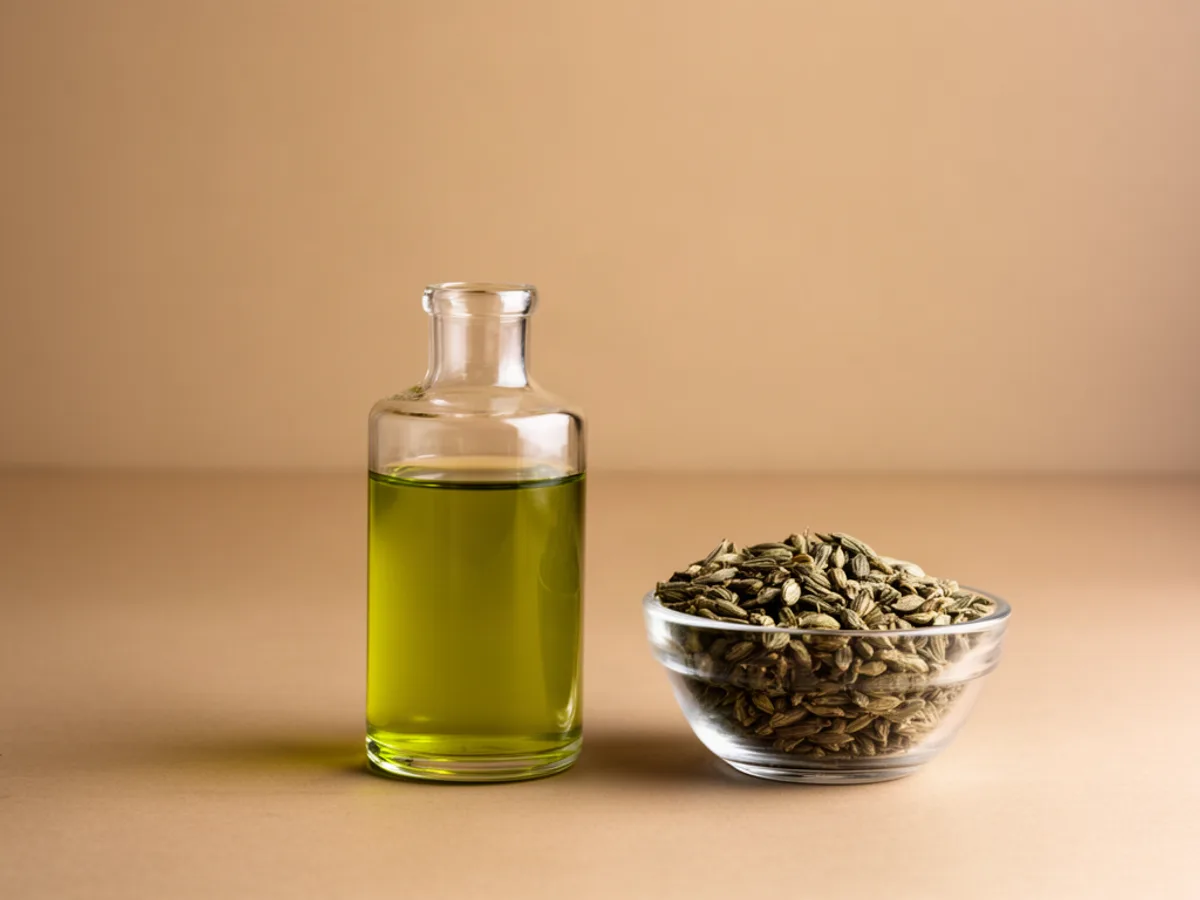
A CBD oil label should tell you the plant part, the CBD content, the batch and the category the product is sold under. If it does not, the seller should be able to tell you in writing. Work through these checks before you rely on any bottle:
- Plant part and source. The label or product page should name the plant part used, such as seed or leaf, and say where the raw material came from. "Hemp extract" on its own is not enough.
- Category. Check whether the product is sold as a food, a personal-care product or a licensed Ayurvedic medicine. Each category carries its own licence number, and the number should be printed on the pack.
- Batch number and lab report. A certificate of analysis is a lab report that shows how much CBD and THC a batch contains. Ask for it, and check that the batch number on the report matches the number on your bottle. A report for a different batch, or with no lab name and date, tells you little.
- Content per bottle and per drop. The label should state the total CBD in the bottle and how much is in a set volume, so you can compare two oils on the same basis.
- Health claims. A label or listing that says the oil heals or stops a named disease is a warning sign. Honest wellness products do not make that kind of promise.
- Manufacturer details. Look for a full name and address of the maker or importer and a customer contact.
Then ask the seller two questions in writing: which rule or licence do they rely on, and do they send the product to your state? Be wary of any seller who says the product is allowed in every state without naming a basis. Brand ranges such as the Neet CBD range list their oils with product details, and the same checks apply to every brand.
Common mistakes people make about CBD oil and the law
The most common mistake is assuming that a rule from another country applies in India. Most of the confusion around CBD oil comes from a handful of assumptions that sound reasonable but do not hold up:
- Using a foreign THC percentage. India has no THC percentage rule for CBD oil. A percentage on an imported label reflects the law where it was written, not Indian law.
- Reading "hemp" as "seed food". The word hemp on a label does not prove a product is a seed-based food. A CBD extract made from leaves or tops can carry the same word.
- Assuming one state's rules travel. State Governments regulate transport, inter-State import and export, possession and use of cannabis other than charas, so a product bought in one state is not automatically fine to carry or order into another.[1]
- Taking a court record as clearance. The Union told the Delhi High Court that cannabis can be used for medical, scientific, industrial and horticultural purposes with the requisite permissions from State Governments.[4] That statement points to permissions; it does not clear every CBD product sold online.
- Trusting a seller's word alone. A statement that a product is compliant means little without a batch-matched lab report and a named rule or licence behind it.
- Treating silence as permission. If a product sits outside the central definitions, state rules may still apply, as the bhang example shows.
Last reviewed: 26 November 2026. General information, not legal advice.
When to ask a doctor or a lawyer
Ask a doctor before using CBD oil if you have any health condition, and ask a lawyer before doing anything with it as a business. This guide explains the rules around the product; it gives no amounts and does not say whether CBD suits any particular person.
Whether CBD is a sensible choice for you, how it might interact with other medicines and how much to take are questions for a doctor or a registered Ayurvedic practitioner who knows your history. CBD can interact with some prescription medicines, so bring the bottle or its label to the appointment. If you would like that conversation, you can speak to one of our panel doctors before you start.
Some people should speak to a doctor first in every case:
- People who are pregnant or breastfeeding.
- People who take regular medicines, including blood thinners or medicines for mood or sleep.
- People who are due for surgery or who have liver problems.
- Parents considering any CBD product for a child.
Business questions are different. If you plan to sell, import, manufacture or move CBD products across state borders, take advice from a lawyer who knows your state's excise rules and the licences your activity needs. A short paid consultation costs far less than a seized consignment, and a written opinion on your specific product is worth more than any general guide, this one included.
?Frequently Asked Questions
Is CBD oil banned in India?
Is hemp seed oil the same as CBD oil under Indian law?
Is there a fixed THC percentage limit for CBD oil in India?
Can I carry CBD oil from one Indian state to another?
Does the NDPS Act mention CBD?
Is bhang covered by the NDPS Act?
What should a CBD oil label show before I trust it?
Sources
Share this article
Written by
THC Store Editorial
Published 2 hours ago