Hemp Seeds Uses in India: Food, Oil, Flour and What the Law Says
THC Store EditorialPublished November 23, 20266 min read
Article Summary
The main uses of hemp seeds in India are as food: they are eaten whole or hulled (hemp hearts), pressed into oil, milled into flour and ground into protein powder, and you can see these formats in the hemp seeds range . They also go into seasonings, ...
The main uses of hemp seeds in India are as food: they are eaten whole or hulled (hemp hearts), pressed into oil, milled into flour and ground into protein powder, and you can see these formats in the hemp seeds range. They also go into seasonings, salts and pasta, and the oil appears in hair and skin care. What the law says about the seed is different from what it says about the flowering tops of the plant, though state rules still matter.[1]
Disclaimer: This article is for informational purposes only and does not constitute medical advice. Always consult a qualified healthcare professional before starting any new supplement or treatment. Cannabis-based products may require a prescription in India under NDPS Act regulations. Book a consultation with our panel doctors for personalized guidance.
Hemp seeds uses in India: the short answer
Hemp seeds in India are used as an everyday food ingredient in four main forms, plus a few packaged foods. In Hindi they are often called भांग के बीज (bhang ke beej), and in the hills of Uttarakhand the roasted seed has long been ground into chutneys and salts.
- Whole or hulled seed: sprinkled on breakfast, salads and snacks.
- Hemp seed oil: cold-pressed from the seed, used on food and in personal care.
- Hemp seed flour: milled from the seed, mixed into rotis and baked goods.
- Hemp protein powder: ground from the seed, added to shakes and drinks.
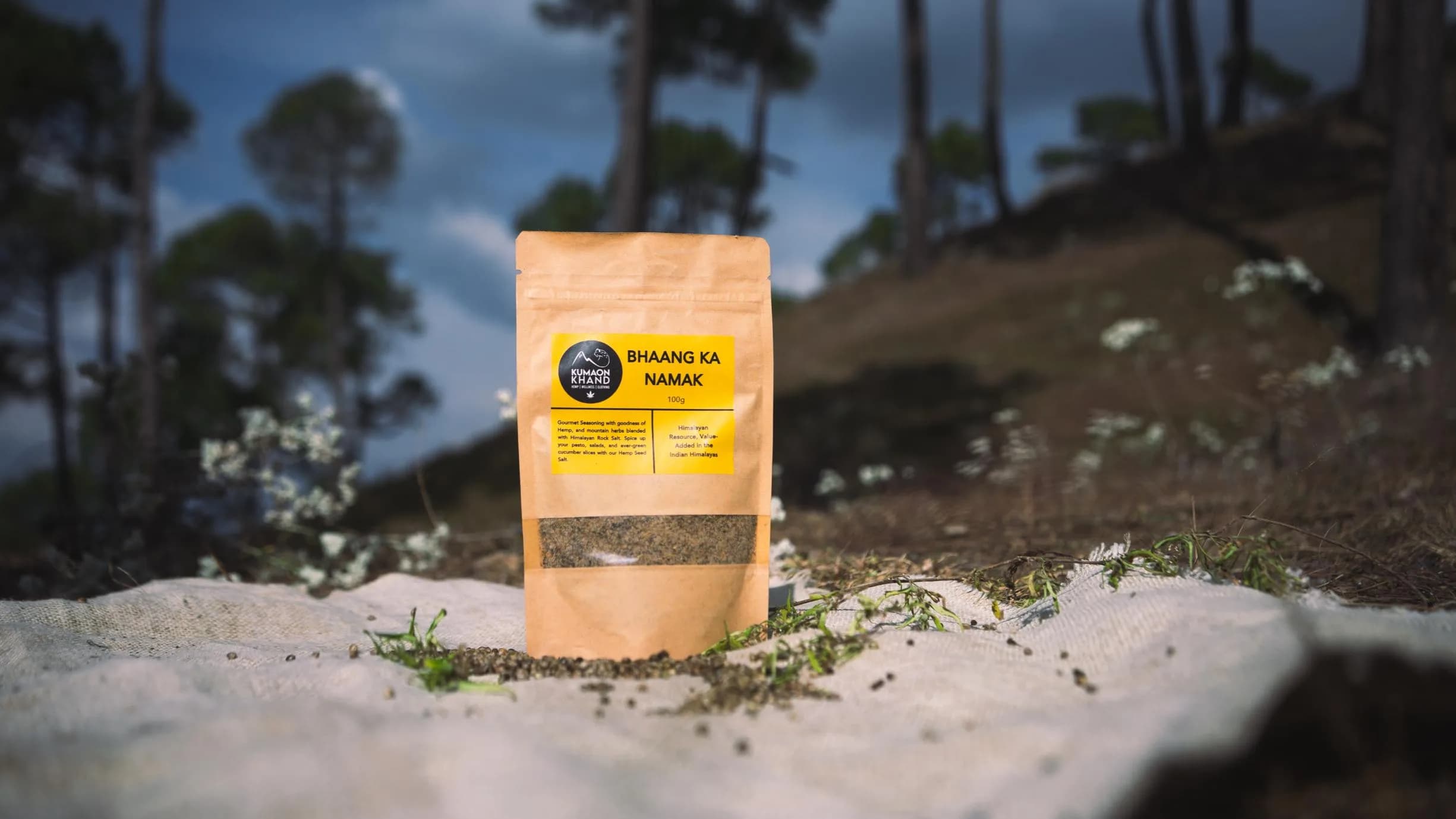
- Packaged foods: seasonings, seed salts such as KUMAON KHAND - Bhaang ka Namak (Hemp Seed Salt) - 100G, and pasta made with hemp flour.
What hemp seeds are made of, and why that shapes their uses
Hemp seeds are mostly fat and protein, which is why they are pressed, milled and ground in the ways listed above. A review of hemp seeds in the Colombian context describes them as rich in three polyunsaturated fatty acids (linoleic, alpha-linolenic and gamma-linolenic acid), good quality protein and several minerals.[2]
The oily part of the seed is what is pressed into oil. What remains after pressing, or the whole seed ground fine, becomes flour and protein powder. The hulled seed keeps both fat and protein, which is why hemp hearts are eaten as they are.
Two packs of hemp seed are not always alike. A recent review of hemp seed as a food ingredient notes that agronomic practices and environmental factors considerably influence the seed's nutritional profile.[3] So the figures on a product's own label tell you more than a general description of hemp seed.
This section describes what the seed contains. It is not a health promise: no part of it says that eating hemp seed will change any medical condition.
Eating the seed: whole, hulled and toasted
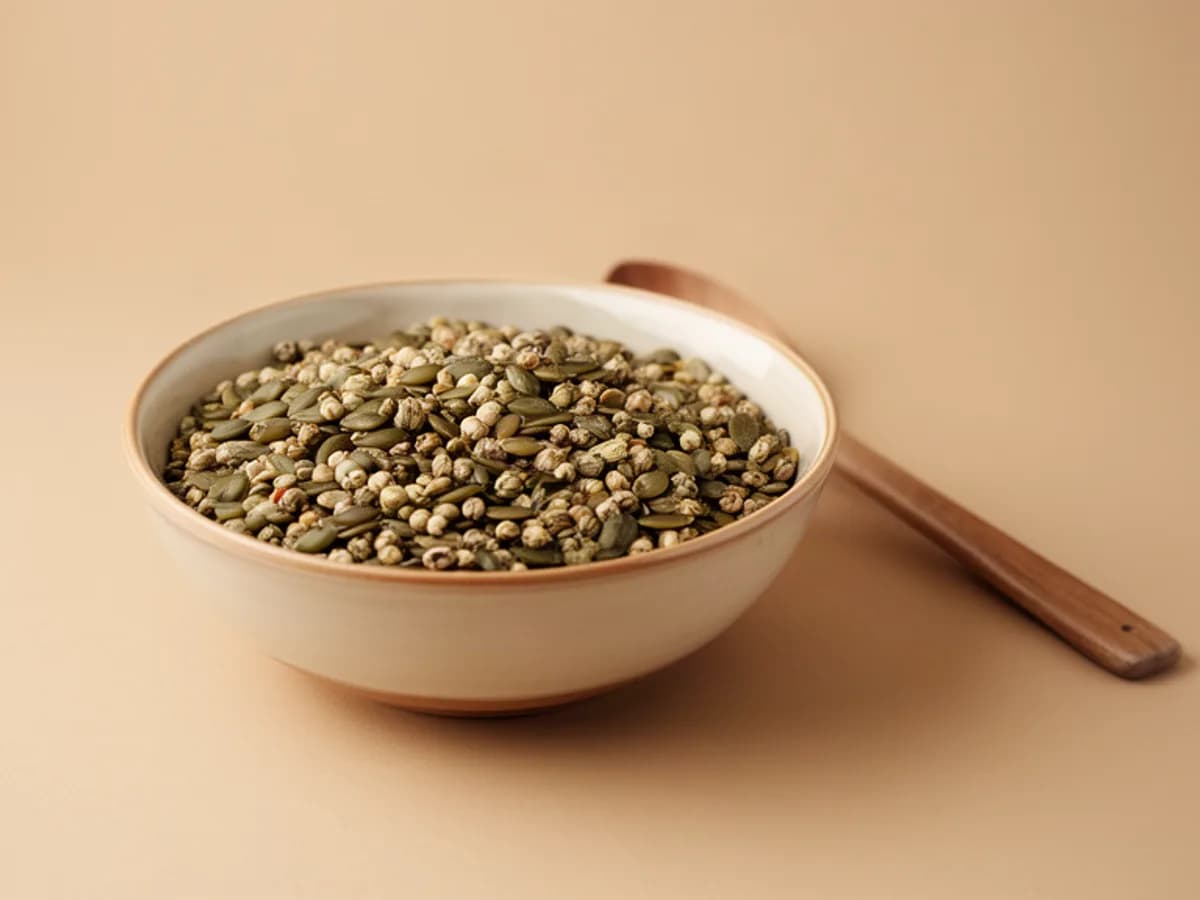
Hemp seeds are eaten in India mostly as hulled hemp hearts or as toasted whole seeds, added to food people already make. Hemp hearts are the seed with its hard shell removed; they are soft, mild and slightly nutty.
- Sprinkled on cereal, poha, upma, yoghurt, raita or a smoothie bowl.
- Stirred into dal or sabzi just before serving.
- Mixed into paratha stuffing or atta dough.
- Ground with green chilli, garlic and salt into a chutney, the way hill kitchens use the roasted seed.
Toasting the whole seed changes its taste and gives it crunch, so toasted seed suits topping and snacking more than cooking. For specific ideas by meal, read how to eat hemp seeds with cereal, smoothie bowls, yoghurt and flour. If you prefer to read in another language, there is a guide to hemp hearts in Hindi and one to hemp seeds in Tamil.
Hemp seed oil, flour and protein powder
Hemp seed oil, flour and protein powder are the three processed forms of the seed, and each has its own place in the kitchen.
Hemp seed oil
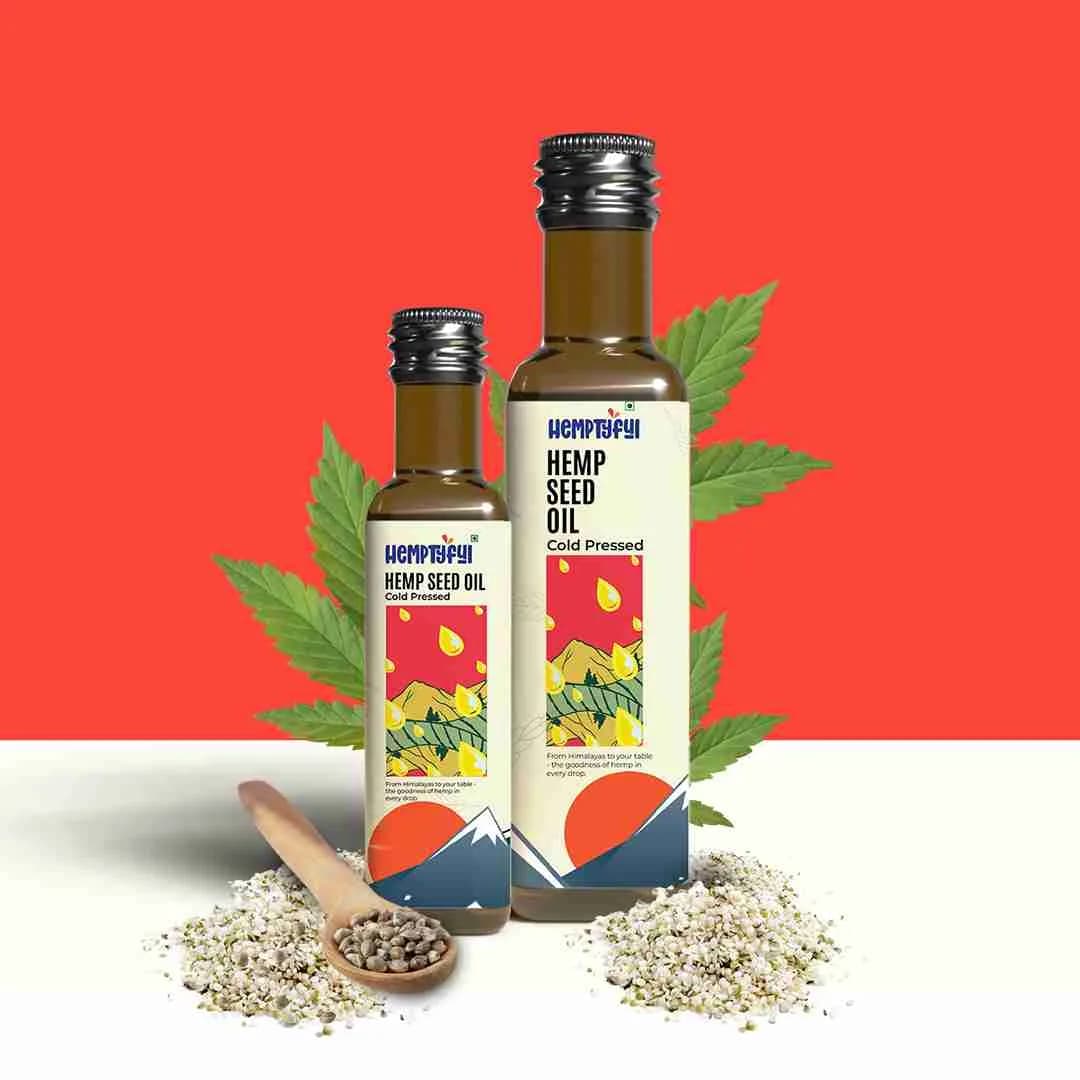
Cold-pressed hemp seed oil is used as a finishing oil: drizzled on salads, dal, curd rice or chutney rather than used for frying, because its delicate fats do not suit high heat. It has a green colour and a grassy taste. A bottle such as Hemptyful - Cold Pressed Hemp Seed - Oil 100/250ml is an example of this food-oil format. The same oil is also used in hair oils and skin creams.
Hemp seed flour and protein powder
Hemp seed flour and protein powder come from the pressed or ground seed and are used in rotis, baking, shakes and laddoos. Hemp flour has no gluten of its own, so it is usually mixed with wheat or another flour rather than used alone. Protein powder is stirred into milk, curd or smoothies, and the hemp protein shelf shows the powder formats. For the protein detail, read about hemp protein powder nutrition in India.
How Indian law treats hemp seed
Indian law treats hemp seed differently from the flowering tops of the cannabis plant. The NDPS Act defines ganja as the flowering or fruiting tops of the plant, excluding the seeds and leaves when they are not accompanied by the tops.[1]
Growing the plant for seed is also addressed in the Act.[4] Section 14 of the NDPS Act lets the Government, by general or special order and subject to conditions, allow cannabis cultivation for the industrial purpose of obtaining fibre or seed, or for horticultural purposes.[4]
State governments hold their own powers. In a Delhi High Court record, the Union of India submitted that under Section 10 of the NDPS Act the state governments are empowered to license cannabis cultivation for industrial and scientific purposes.[5] The same record notes that Uttarakhand has allowed hemp cultivation for industrial purposes.[5]
How much rests with the states shows in bhang. The Union's submission in that record says bhang, an edible preparation of cannabis, is not controlled under the NDPS Act but by the respective state governments.[5]
Hemp seed, hemp seed oil and hemp seed flour are sold in India as foods. The central law sets out the points above, and each state's excise law decides the rest, so what applies to you depends on where you live.
Last reviewed: 23 November 2026. General information, not legal advice.
What to check before choosing a hemp seed product
Choosing a hemp seed product comes down to reading the label for what it is, where it came from and what it claims. Hemp seed foods in the store usually sell for around ₹300–₹850, and price alone tells you little about the product.
- The form: hulled seed, toasted seed, oil, flour or powder, and that it is sold as a food.
- The source and processing: where the seed was grown and how it was processed (cold-pressed, toasted, hulled), since growing conditions change the seed's nutritional profile.[3]
- The nutrition panel: fat, protein and fibre per serving for that product, not a general figure for hemp.
- Dates and storage: a packing date, a best-before date and storage advice, since the oil-rich seed can go rancid once opened.
- The claims: be wary of any label or listing that says the food will fix or lower a health problem.
Hemp seed, oil and flour are also a different category from CBD oil and from Vijaya (cannabis leaf) medicines. For that separate topic, read the Vijaya extract guide.
A question for your doctor, not this page
Whether hemp seed suits you, if you have a medical condition, a food allergy or take regular medicines, is a question for a doctor who knows your history. This page describes how the seed is used and what it contains; it does not give amounts for any condition.
If you want to ask before adding hemp seed foods to your diet, you can speak to one of our panel doctors.
?Frequently Asked Questions
What are hemp seeds used for in India?
Are hemp seeds the same as bhang or ganja?
Can you eat hemp seeds raw?
What is the difference between hemp seeds and hemp hearts?
Is hemp seed oil the same as CBD oil?
Does hemp seed flour work for rotis and baking?
What do hemp seeds contain?
Sources
Share this article
Written by
THC Store Editorial
Published 1 hours ago