Hemp Description and Uses: What the Plant Is and What It Makes
THC Store EditorialPublished November 28, 202617 min read
Article Summary
Hemp turns up on a jar of seeds, a canvas tote, a bar of soap and a sheet of paper, and it is fair to wonder how one plant makes all of them. The plain description: hemp is a tall, fast-growing plant of the species Cannabis sativa , grown for its see...
Hemp turns up on a jar of seeds, a canvas tote, a bar of soap and a sheet of paper, and it is fair to wonder how one plant makes all of them. The plain description: hemp is a tall, fast-growing plant of the species Cannabis sativa, grown for its seed, stalk fibre and woody core, and its uses follow those parts.
Our main page, The Many Uses of Hemp: A Green Marvel, gives the wider overview. This post is the plain-language version: seed becomes food, seed oil goes into cooking and skin care, stalk fibre becomes cloth, rope and paper, and the woody core goes into building and packing material. Which of these is allowed in India depends on the plant part and on each state's rules.
Disclaimer: This article is for informational purposes only and does not constitute medical advice. Always consult a qualified healthcare professional before starting any new supplement or treatment. Cannabis-based products may require a prescription in India under NDPS Act regulations. Book a consultation with our panel doctors for personalized guidance.
Hemp description and uses in short
Hemp is one plant with four useful parts, and almost every hemp product on a shelf is made from just one of them. Knowing which part a product comes from tells you most of what you need to know about it.
- Seed: eaten whole, hulled into soft "hemp hearts", ground into flour or pressed into protein powder.
- Seed oil: pressed from the seed and used as a cold food oil and in lotions, balms and soaps.
- Stalk fibre (bast): the long strands in the outer layer of the stalk, spun into rope, canvas, cloth and paper.
- Hurd and biomass: the woody inner core and leftover plant matter, used in building blends, animal bedding, mulch and packing.
Two practical points follow from this. First, a label should say which part of the plant is inside, because "hemp" on its own says very little. Second, Indian law treats the parts of the plant differently, and states decide a good deal of the practical position, which is covered in the legal section further down.
What is hemp? A plain description of the plant
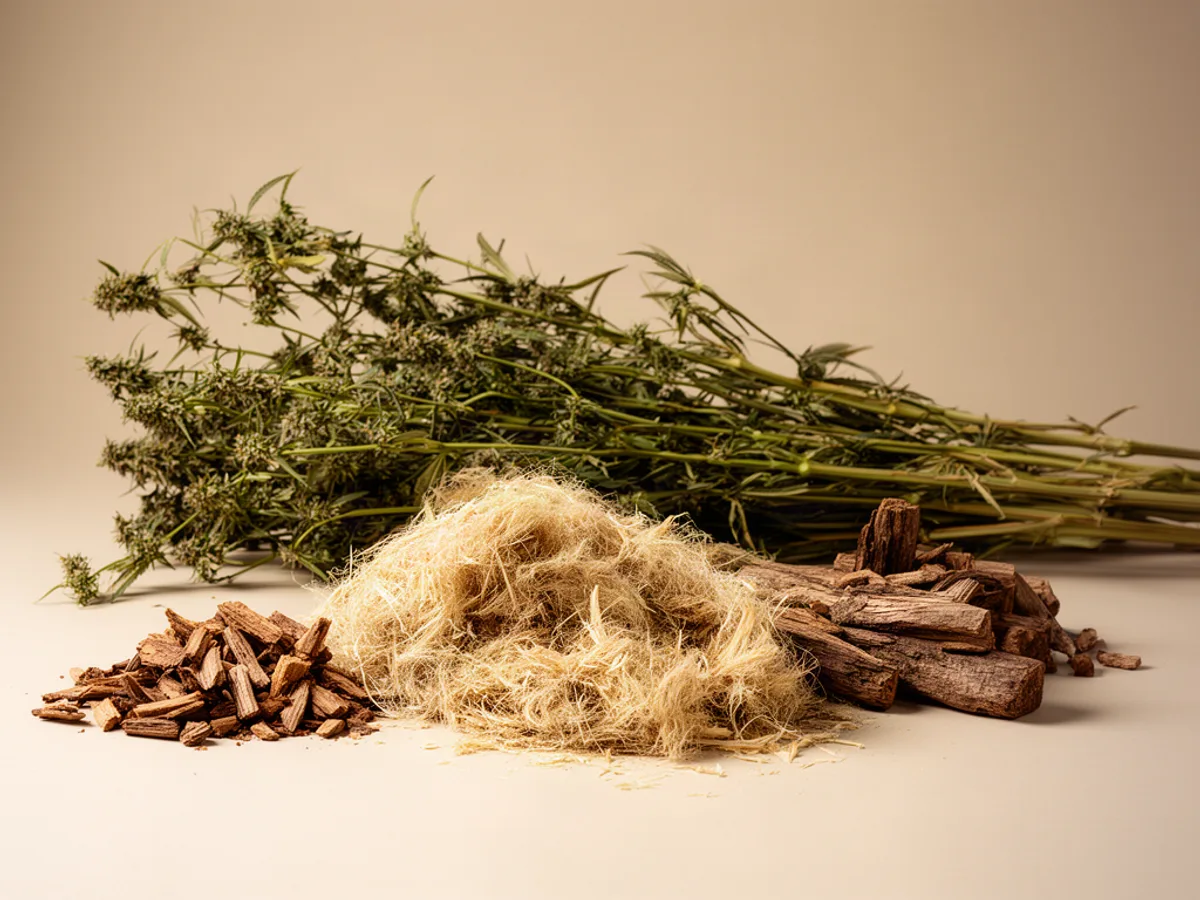
Hemp is an annual plant that grows upright from seed to harvest in a single season, with a tall, slender stalk, deeply serrated leaves arranged like the fingers of a hand, and small, hard, round seeds. Cut a hemp stalk across and you see two layers: a thin outer bark that holds long, tough fibres, and a pale, woody inner core called the hurd. That two-layer stalk is the reason the plant has been useful for so long, because each layer becomes a different material.
Hemp and the plant people usually call cannabis belong to the same genus. The word "hemp" is generally used for varieties bred and grown for fibre and seed, with tall stalks and plenty of seed, rather than for their flowering tops. Indian law does not start from the word hemp at all. Under Section 2 of the NDPS Act, 1985, the "cannabis plant" means any plant of the genus cannabis.[1] So in India, a hemp crop is legally a cannabis plant, and what matters is which part is used and under what permission.
Farming for fibre and seed relies on varieties that are low in THC (tetrahydrocannabinol, the compound in cannabis that causes a "high"). India has no fixed THC percentage in its central law that turns a cannabis crop into "hemp"; that kind of cut-off comes from rules in other countries.
The plant grows quickly, shades out much of the competing growth around it, and is farmed in many climates, from cool temperate regions to the Himalayan foothills. In parts of India it also grows wild on roadsides and field edges, which is one reason people are often unsure where everyday hemp ends and regulated cannabis begins.
What is hemp used for? The uses sorted by plant part
Hemp is used for food, oil, fibre and industrial material, and the easiest way to understand those uses is to sort them by the part of the plant they come from. Each part goes through its own processing and ends up on a different kind of shelf.
Seed and seed oil
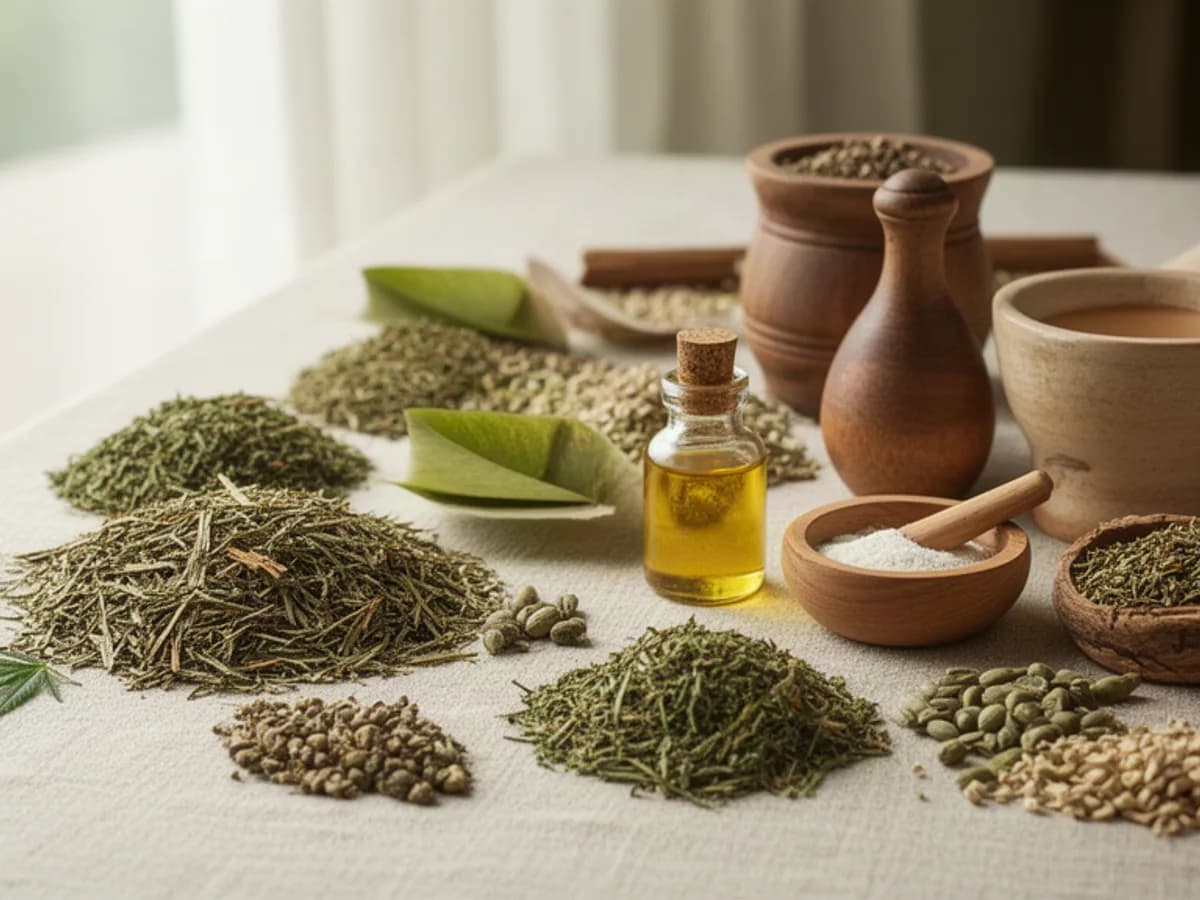
The seed is sold whole, with its crunchy shell, or hulled, when the soft inner kernel (often called hemp hearts) is separated from the shell. Seeds are also ground into flour, pressed into oil, and the pressed cake left after oil extraction is milled into protein powder. These are food uses, and they are the hemp products most Indian households meet first.
Stalk fibre
The long bast fibres from the outer stalk become cordage and twine, canvas, cloth, blended yarns for shirts and denim, bags and paper. These fibres were once the standard material for ship ropes and sailcloth in many countries.
Hurd and biomass
The woody core and leftover plant matter go into building blends, animal bedding, garden mulch, packing material and fuel pellets. This is low-value bulk material, but it means very little of a harvested plant goes to waste.
Indian policy points in the same direction. The national narcotics policy, as described in a Delhi High Court judgment page, encourages low-THC cannabis varieties for industrial and horticultural use, as a source of biomass and fibre and for seed oil.[2] The Union of India's submissions in the same case record that cannabis can be used for medical, scientific, industrial and horticultural purposes with permissions from the respective State Governments.[2]
This post is about these everyday and industrial uses. It is not about any health condition, and nothing here describes what a hemp product will do for a person's body.
Hemp seeds as food: what is in them
Hemp seeds are a food mostly made of protein, fat and fibre, and they are eaten in three common forms. Whole seed keeps its hard shell and adds crunch and fibre. Hulled seed, or hemp hearts, is the soft, nutty kernel with the shell removed, and is the form most people sprinkle on food. Seed flour is ground seed or ground press cake, used in part for wheat or other flours in baking.
The protein content changes with the form. A review of hemp in food reports that raw hemp seed contains 18.3-23.0% protein, while dehulled seed contains 24.6-28.4%.[3] The difference makes sense: removing the shell takes away fibre and concentrates what is left.
A second review describes the overall make-up of the seed. It says hemp seed is mainly easily digestible protein (20-25%), lipids (25-35%) and carbohydrates (20-30%) high in insoluble fibre, along with polyunsaturated fatty acids.[4] The exact numbers vary with variety, growing conditions and processing, which is why reviews give ranges rather than single figures.
The quality of the protein is the other point people ask about. A review of hempseed nutrition research notes that hempseed is a plant protein source that contains all nine essential amino acids.[5] Essential amino acids are the building blocks of protein that the body cannot make and has to get from food.
These are facts about what is in the seed, not promises about what eating it will do. In Indian kitchens, hemp hearts usually go into poha, upma, raita, chutneys, laddoos and smoothies, or are toasted lightly and sprinkled over salads. For a fuller list of food forms, read hemp seeds uses in India, from food and oil to flour, and for recipes and serving ideas see how to eat hemp seeds in cereal, smoothie bowls, yoghurt and flour.
Hemp seed oil: what it is and how it is used
Hemp seed oil is a food oil pressed from hemp seeds, usually cold-pressed, with a green colour and a nutty, slightly grassy taste. Hemp seed oil is not the same thing as CBD oil: seed oil comes from the seed, while CBD oil is an extract of cannabidiol, usually from other parts of the plant, mixed into a carrier oil. The difference is set out in hemp oil vs CBD oil, what each is and how they differ.
The oil's main feature is its fat profile. A review abstract states that hemp seed oil is a source of two essential fatty acids, linoleic acid and alpha-linolenic acid, in a 3:1 ratio.[6] Linoleic acid is an omega-6 fat and alpha-linolenic acid is an omega-3 fat; both are called essential because the body has to get them from food.
In practice, hemp seed oil is used in a few ways:
- Cold food use: drizzled on salads, stirred into dips and chutneys, or added to a dish after cooking.
- Personal care: as an ingredient in lotions, balms, lip care, soaps and hair oils.
- Finishes: in some traditional wood finishes and paints, where drying oils are used.
Hemp seed oil is delicate because polyunsaturated fats react with heat, light and air and turn rancid. It is not a frying oil. Keep it in a dark bottle, tightly closed, in a cool place or the fridge once opened, and smell it before use; a sharp, paint-like smell means it has gone off. To see the food forms side by side, the store's hemp seeds collection lists seeds and hearts, and the hemp nutrition collection lists oils, flours and protein forms.
Hemp fibre, textiles and rope
Hemp fibre is the long, strong strand from the outer layer of the stalk, known as bast fibre, and it is made into rope, canvas, cloth and paper. To get it out, harvested stalks are first retted, which means left in the field or soaked so that moisture and microbes loosen the glue holding the fibres to the woody core. The stalks are then broken and scraped mechanically to separate the long fibres from the hurd, combed, and spun into yarn.
The finished uses are wide. Coarse fibre becomes rope, twine and sacking. Finer fibre is woven into canvas for bags and shoes, and into fabric for shirts, trousers and denim, often blended with cotton or linen for a softer hand. Bags, caps, wallets and footwear uppers are common everyday hemp items.
In general terms, hemp cloth is strong, absorbent and breathable. New hemp fabric can feel stiff, and it softens with each wash. It creases much like linen. Pure hemp is less common in shops than blends, because blending makes the fabric softer and cheaper to produce.
When you read a garment label, check three things:
- The fibre percentage: a label that states the share of hemp and of each other fibre tells you what you are buying; "hemp blend" alone does not.
- Whether it is a blend: a blend behaves partly like the other fibre in it, for shrinking and feel.
- The care instructions: most hemp cloth washes well in cool water and dries in shade.
Everyday fibre products such as bags, accessories and clothing are listed in the store's hemp lifestyle collection, where the product page should state the fibre content.
Hemp paper, building material and other industrial uses
Hemp paper, building blends and packing material are the main industrial uses of hemp, and they draw on both the bast fibre and the woody hurd. These uses rarely carry the word "hemp" in large letters, but they account for a large share of what the crop is grown for in countries with a hemp industry.
For paper, bast fibre gives long, strong strands, while hurd gives shorter fibres that pulp more like wood. Paper makers use either one, or blend hemp pulp with wood pulp to balance cost, strength and finish. The details of those blends are covered in what hemp paper is made of: bast, hurd and wood-pulp blends.
For building, chopped hurd is mixed with a lime-based binder and water to make a light, solid infill for walls, often called hempcrete. It is used as an insulating and moisture-buffering layer, not as a load-bearing structure, and it needs a frame to carry the building's weight.
Other uses for hurd and leftover biomass include:
- animal bedding, because the chopped core is absorbent and low in dust;
- garden mulch and compost material;
- composite boards and panels pressed with a binder;
- bioplastics and moulded packaging, where plant fibre is mixed with resins;
- fuel pellets and briquettes from dried biomass.
The policy language matches this industrial direction. The national narcotics policy, as recorded in the Delhi High Court judgment page, encourages low-THC varieties as a source of biomass and fibre and for seed oil.[2] In other words, fibre and bulk plant material are the uses the policy has in mind for these varieties, alongside seed oil.
Hemp uses compared: seed, oil, fibre and hurd
Hemp's four useful parts differ in what they become, how they are processed and what you should check before buying. The table puts them side by side.
| Plant part | Typical finished products | How it is processed | Main thing to check |
|---|---|---|---|
| Seed | Whole seed, hemp hearts, flour, protein powder | Cleaned, hulled, ground or pressed; raw seed holds 18.3-23.0% protein and dehulled seed 24.6-28.4%[3] | Labelled as hemp seed, ingredients list, best-before date |
| Seed oil | Food oil, lotions, balms, soaps | Pressed from the seed, usually cold; linoleic to alpha-linolenic acid in a 3:1 ratio[6] | Says "hemp seed oil", dark bottle, smell when opened |
| Stalk (bast) fibre | Rope, canvas, cloth, bags, paper | Retted, broken, scraped, combed and spun | Fibre percentage and blend on the label |
| Hurd (woody core) | Building infill, bedding, mulch, panels, packing | Separated from fibre, chopped, mixed with a binder or used loose | What it is mixed with and what it is meant for |
The same plant can supply all four parts, but a given product normally uses only one, so the label should tell you which.
Is growing and using hemp allowed in India?
Growing and using hemp in India is allowed only within the limits of central law and the permissions each state grants, and the answer differs by plant part. The central law draws its main line between the flowering tops and the rest of the plant. The NDPS Act, 1985 defines ganja as the flowering or fruiting tops of the cannabis plant, and excludes the seeds and leaves when they are not accompanied by the tops.[1] That is why seed foods and seed oil sit in a different place from the flowering tops.
Cultivation is a state matter in practice. According to the Union of India's stand recorded in a Delhi High Court judgment page, Section 10(iii) of the NDPS Act empowers State Governments to permit and regulate cultivation of the cannabis plant and its production, sale and use, so each state's rules decide the practical position.[2] The same submissions record that cannabis can be used for medical, scientific, industrial and horticultural purposes with permissions from the respective State Governments.[2]
Some states have used these powers. The judgment page records that Uttarakhand, using its Section 10 powers, has allowed cultivation of hemp for industrial purposes.[2] A farmer elsewhere cannot assume the same; each state's licensing and excise rules decide whether and how hemp may be grown there.
For food, Indian rules allow only hemp seed, hemp seed oil and hemp seed flour to be sold as food, with upper limits on the THC and CBD they may contain. Leaves, flowers and extracts are not food ingredients. There is no THC percentage rule in India that makes any part of the plant a food by itself.
Leaf preparations are a separate question with their own rules, explained in is vijaya leaf legal in India and what the NDPS Act says.
Hemp is not the same as bhang, vijaya leaf or CBD oil
Hemp seed foods, hemp seed oil, bhang, vijaya leaf medicines and CBD oil are five different products from the same genus, and each follows different rules. Mixing them up is the most common source of confusion about hemp in India.
Bhang is a traditional preparation made from cannabis leaves, often ground into a paste and mixed into drinks or sweets, especially around Holi. The Delhi High Court judgment page records that bhang, an edible preparation of cannabis, is not controlled under the NDPS Act but by the respective state governments.[2] That means state excise law, not the central Act, decides where and how it can be sold. Bhang is not a hemp seed food, and its effects, such as drowsiness, slower reactions and a changed sense of time, are not something hemp seeds or seed oil produce.
Vijaya is the classical Ayurvedic name for the cannabis leaf. Leaf-based Ayurvedic medicines are a separate subject: they are made under a state Ayurvedic manufacturing licence and are meant to be used under the guidance of a registered Ayurvedic practitioner. The background is set out in Ayurvedic medical cannabis and the vijaya extract guide for India.
CBD oil is an extract of cannabidiol in a carrier oil. It is not pressed seed oil, even when the bottle says "hemp oil". Readers who meant CBD rather than hemp can read is CBD oil legal in India and what the NDPS Act and states say, and the products themselves are listed in the store's CBD oil collection.
Last reviewed: 28 November 2026. General information, not legal advice.
How to choose a hemp product and read the label
Choosing a hemp product starts with matching it to the plant part you actually want, then reading the label to confirm that is what is inside. A seed or oil is for the kitchen, a fibre product is for wearing or carrying, and an extract is a different category altogether.
For hemp foods, check these points:
- The name: the label should say hemp seed, hemp hearts, hemp seed oil or hemp seed flour, not just "hemp".
- The ingredients list: a single-ingredient product should list only hemp seed or hemp seed oil; blends should list everything added.
- The batch number and best-before date: seeds and oils age, so a clear date matters.
- A lab report: ask whether the seller can show a test report for the batch, covering THC and CBD content and basic contaminants.
- The licence details: a packaged Indian food should carry the manufacturer's or importer's food licence number and address.
"Hemp oil" is the label phrase most worth questioning, because sellers use it for both pressed seed oil and CBD extracts. If the label does not say which, ask the seller before buying. Hemp seed foods usually sell for around ₹300–₹850, so a product priced far outside that is worth a second look at what it really contains.
For fabric, look for the fibre percentage and be wary of words such as "hemp-feel" or "hemp-inspired", which can mean very little hemp. For skin-care products, read where hemp sits in the ingredients list; ingredients are listed from most to least. The store's hemp personal care collection lists soaps, balms and lotions that use hemp seed oil.
For storage, keep seeds and oils sealed, cool and away from light. Refrigerate hulled seeds and opened oil, and keep fibre products dry and aired to avoid mildew.
What is not known, and when to ask a doctor
What is known about hemp seed is its composition; what is not known is what any particular hemp food will do for any one person. The figures in this post describe what the seed contains, and no study cited here tested a particular product in people.
The protein figures come from a review of hemp in food that pooled published measurements of seed composition.[3] The amino acid point comes from a review of hempseed nutrition research, which describes the seed's make-up rather than results from a trial of a branded product.[5] Composition also shifts between varieties, harvests and processing methods, so one jar can differ from another.
Hemp seed is a food, and the usual food cautions apply. Some people react to seeds, and anyone with known seed or nut allergies should start with a small amount or check first. Anyone who takes regular medicines, is pregnant or breastfeeding, or is introducing a new food to a child should speak to a doctor before adding hemp seed, oil or protein powder to the diet. Hemp seed oil is still a fat, so it adds calories like any other cooking oil.
Questions about cannabis-leaf medicines are a different matter from hemp foods. They belong with a doctor or a registered Ayurvedic practitioner who can look at your health and medicines, not with a shop page or a blog.
Finally, the research on hemp as a food is still mostly about what is in the seed, not about long-term eating patterns in Indian diets. That is the honest limit of what anyone, this post included, can tell you.
?Frequently Asked Questions
What is hemp in simple words?
What is hemp used for?
Is hemp the same as cannabis?
Is hemp seed the same as hemp seed oil?
Does hemp seed contain all the essential amino acids?
Can hemp be grown in India?
Is hemp fabric different from cotton?
Sources
Share this article
Written by
THC Store Editorial
Published 1 hours ago