
Kameshwar Modak Uses: What It Is, Ingredients and Label Rules
Article Summary
Kameshwar Modak uses in short A strip of tablets or a box of small sweet balls named Kameshwar Modak usually raises one question first: what is it for? Kameshwar Modak uses are classical: makers describe it as a Rasayana-Vajikarana formulation, meani...
Kameshwar Modak uses in short
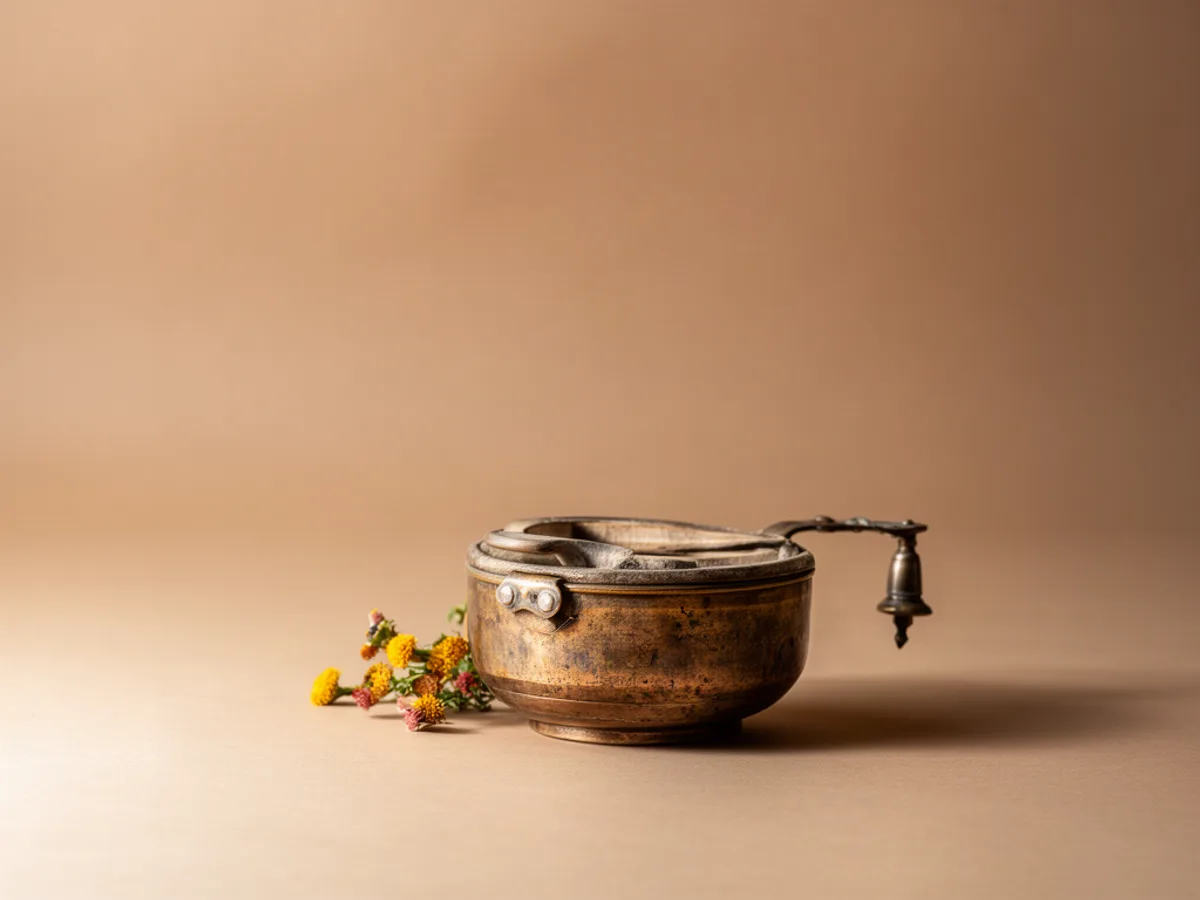
A strip of tablets or a box of small sweet balls named Kameshwar Modak usually raises one question first: what is it for? Kameshwar Modak uses are classical: makers describe it as a Rasayana-Vajikarana formulation, meaning rejuvenative and vitality-oriented in Ayurvedic terms, to be used under proper guidance.[1] The related cannabis-leaf Ayurvedic tablets the store lists are grouped in our Vijaya Vati collection.
This guide covers what Kameshwar Modak is, its ingredients, its classical use and the label rules that apply to it. Kameshwar Modak is made as small modaks in a base of sugar syrup, cow's ghee, honey and roasted bhang, with rejuvenative herbs blended in.[1] The caution "to be taken under medical supervision", printed in English and Hindi, is required by Rule 161(2) of the Drugs and Cosmetics Rules, 1945 for Ayurvedic medicines for internal use made from a Schedule E(1) substance.[2] Nothing in this post claims the formulation fixes any health problem.
Disclaimer: This article is for informational purposes only and does not constitute medical advice. Always consult a qualified healthcare professional before starting any new supplement or treatment. Cannabis-based products may require a prescription in India under NDPS Act regulations. Book a consultation with our panel doctors for personalized guidance.
The sections below separate the classical modak from the tablet sold under the same name and from Mewa Modak, explain what the central law and the states say about bhang, show how to read a pack before choosing, and say plainly what is not known.
What is Kameshwar Modak?
Kameshwar Modak is a traditional Ayurvedic formulation made in a confection style and shaped into modaks, the small rounded sweets most Indians know from festival kitchens. In Hindi and Sanskrit the name is written कामेश्वर मोदक (Kameshwar Modak). The word modak describes the form: a soft, sweet, hand-rolled ball rather than a powder, a decoction or a pill.
Kameshwar Modak belongs to two branches of classical Ayurveda, and its description uses both names together. Planet Ayurveda calls it a comprehensive Rasayana-Vajikarana formulation.[1] The two Sanskrit terms mean the following in plain English:
- Rasayana is the branch of Ayurveda concerned with rejuvenation, meaning preparations meant to support general strength and renewal over time.
- Vajikarana is the branch concerned with vitality and reproductive wellness in the classical sense.
Neither term is a medical diagnosis or a promise of a result. They are categories from the classical texts that tell a practitioner what kind of formulation this is meant to be.
Kameshwar Modak recipes are not identical from one maker to the next. Classical formulations are written down in old texts, and manufacturers interpret those texts, choose their own herb sources and decide on the final form. One maker may sell soft modaks in a jar, another may compress the same idea into tablets. The name on the pack tells you which classical formulation the maker is following; the ingredient list on the same pack tells you what that maker actually put in.
What is in Kameshwar Modak? Ingredients explained
Kameshwar Modak ingredients fall into three groups: a sweet, fatty base that contains roasted bhang, a set of herbs, and a herbo-mineral preparation. According to Planet Ayurveda, the herbs are blended in a base of sugar syrup, cow's ghee, honey and roasted bhang (Cannabis sativa).[1] Bhang here means a preparation of the cannabis leaf, which in this recipe is roasted before it goes into the base.
The herbs
Planet Ayurveda names Ashwagandha, Vidarikand, Giloy and Safed Musli among the herbs, alongside the herbo-mineral agent Abhrak Bhasma.[1] These are familiar names in Indian Ayurvedic shops:
- Ashwagandha is a root widely used in Rasayana preparations.
- Vidarikand is a tuber used in classical nourishing formulations.
- Giloy is a climbing plant whose stem is used in many household and classical preparations.
- Safed Musli is a root traditionally placed among vitality herbs.
The herbo-mineral part
Abhrak Bhasma is a preparation of purified mica, and it is the mineral component of Kameshwar Modak. A bhasma, in general terms, is a mineral or metal that has been put through repeated classical purification steps, such as washing, grinding with plant juices and heating, until it becomes a fine ash. How well that purification is done depends on the manufacturer, which is one reason the maker's name and licence matter.
Why ghee, honey and sugar
Ghee, honey and sugar syrup act as carriers and binders in classical modaks. In general Ayurvedic practice, ghee and honey are used to carry herbs and make a preparation easier to take, and sugar syrup holds the mixture together so it can be rolled into balls. They also make the modak a food-like item, which affects how it should be stored.
The exact ingredient list differs between manufacturers. Treat any published list, including the one above, as one maker's description. For a particular pack, the label is the reference: it should name each herb, the bhang content and any bhasma.
What is Kameshwar Modak traditionally used for?
Kameshwar Modak is traditionally used as a Rasayana-Vajikarana formulation, which means a rejuvenative and vitality preparation in classical Ayurvedic terms, and makers say it should be used under proper guidance.[1] That is the full extent of what the verified material says about its use.
This description is a maker's account of classical use, not a measured result in people. It tells you where the formulation sits in the classical system and what kind of purpose the texts give it. It does not tell you what will happen to any one person who takes it, and this post does not promise any outcome.
Three things follow from that:
- Kameshwar Modak is not described here as a remedy for any disease, and no claim is made that it fixes, stops or reverses any condition.
- No dose is given here. Quantity, timing and duration are decisions for a practitioner who has seen the person, because the formulation contains bhang and a bhasma.
- Classical Ayurveda itself matches a formulation to the person. The same preparation may be judged suitable for one person and unsuitable for another based on their constitution, age, digestion and other medicines.
How a person responds to a bhang-containing preparation also varies. Body weight, whether it is taken with food, what else the person is taking and their past use of bhang can all change how it feels. A registered Ayurvedic practitioner is the right person to decide whether Kameshwar Modak suits someone at all, and in what form.
If you came to this page because a friend or relative recommended it, the useful next step is to take the pack itself to that practitioner. The label, the maker and the form matter more than the name alone.
Kameshwar Modak vs Kameshwar tablet vs Mewa Modak
Kameshwar Modak, the Kameshwar tablet and Mewa Modak are three different things on a shop shelf, even though their names overlap. The classical Kameshwar Modak is the soft modak form. The tablet is a compressed form sold at a set tablet strength, so its pack and label decide what you actually have. Mewa Modak is a different traditional preparation with a different ingredient emphasis.
The tablet form is what many readers first meet. The Sanan Kameshwar Modaka Tablet is an example of Kameshwar Modak sold as Ayurvedic tablets rather than soft modaks. A tablet makes the amount per piece fixed and easier to read on a label, while a hand-rolled modak can vary more in size from one piece to another.
Mewa Modak takes its name from mewa, the everyday Hindi word for dry fruits, and it follows its own recipe.
| Option | Form | Typical base or carrier | How the label describes it | Where to read more |
|---|---|---|---|---|
| Kameshwar Modak (classical) | Soft, small sweet balls | Sugar syrup, cow's ghee, honey and roasted bhang, per one maker | Classical Rasayana-Vajikarana formulation with herbs and a bhasma | This guide |
| Kameshwar Modak tablet | Compressed tablet at a set strength | Decided by the maker; read the pack | Ayurvedic tablet with strength and ingredients printed on the strip or box | The product page and its label |
| Mewa Modak | Modak or vati form | Its own recipe; the name points to dry fruits | A separate traditional preparation with its own ingredient list | Its own pack label |
The practical rule is simple: do not assume that advice, a quantity or a description meant for one of these applies to the others. Read the name, the form and the ingredient list on the pack in your hand.
Why the label says 'to be taken under medical supervision'
The label on Kameshwar Modak says "to be taken under medical supervision" because Indian drug rules require that caution on certain Ayurvedic medicines. Rule 161(2) of the Drugs and Cosmetics Rules, 1945 requires an Ayurvedic medicine for internal use made from a Schedule E(1) substance to be labelled conspicuously with the words "Caution: to be taken under medical supervision" in both English and Hindi.[2]
This supervision rule is a labelling requirement for certain medicines.[2] The NDPS Act deals with which parts and preparations of the cannabis plant are controlled as narcotic drugs.[3] The labelling caution is a separate requirement for how certain Ayurvedic medicines must be presented to the buyer.
In practice, the caution means three things for a reader:
- The caution is a label requirement, not a decoration. A bhang-containing Ayurvedic medicine for internal use that lacks it on the pack is a reason to stop and ask questions about the maker.
- The words are meant to be read. They tell you the maker expects the product to be taken with a practitioner involved, not chosen alone from a website.
- The caution should appear in both languages. If you see only an English line, or the text is tiny and hidden, note that when judging the product.
Before using Kameshwar Modak, see a registered Ayurvedic practitioner and take the pack with you. The practitioner can read the full ingredient list, check it against your other medicines and decide whether the formulation fits you. That is the purpose the caution on the label serves.
Is bhang in Kameshwar Modak legal? What central law and states say
Bhang, the cannabis-leaf ingredient in Kameshwar Modak, sits in a different place under central law from the parts of the plant the NDPS Act names as drugs, and state rules decide much of the rest.[4] Section 2 of the NDPS Act, 1985 defines ganja as the flowering or fruiting tops of the cannabis plant, and excludes the seeds and leaves when they are not accompanied by the tops.[3] The same Section 2 of the NDPS Act, 1985 defines charas as the separated resin of the cannabis plant in any form, including hashish oil.[3] Section 2 also defines medicinal cannabis as any extract or tincture of cannabis (hemp).[3]
The central government's own position has been recorded in court. In a Delhi High Court matter, the Union of India's submission recorded that bhang, an edible cannabis preparation, is not controlled under the NDPS Act but by the respective state governments.[4] The same submission said that Section 10 of the NDPS Act empowers state governments to permit and regulate the cultivation, production, manufacture, possession and transport of cannabis, excluding charas.[4] The Union also told the court that the NDPS Act does not ban cannabis completely, and allows medical, scientific, industrial and horticultural use with the required permissions from state governments.[4]
A peer-reviewed letter in Indian medical literature argues that bhang does not fall within the Act's definition of cannabis (hemp) under Section 2(iii), so the Act's narcotic provisions do not apply to cannabis in bhang form.[5] That letter is one argued position in a journal, not a court ruling, and it should not be read as settled advice.
For a pack of Kameshwar Modak, this means the central Act treats leaf preparations differently from the tops and the resin, and each state's excise law decides how bhang and bhang-based products may be made, sold, held and moved there. No product can honestly be described as cleared in every state. For more detail, read our guides on whether vijaya leaf is legal in India and whether edibles are illegal in India.
Last reviewed: 29 November 2026. General information, not legal advice.
How to read a Kameshwar Modak label before choosing
A Kameshwar Modak label tells you most of what you need to judge a product, provided you know where to look. Go through these points on the pack itself, not on a seller's description:
- Manufacturer and licence. The pack should name the maker, its address and the licence it was made under. A product made under a state Ayurvedic manufacturing licence prints that licence number on the pack.
- Ingredient list. Look for bhang named clearly, each herb named, and any bhasma such as Abhrak Bhasma listed. Vague wording like "herbal blend" with no breakdown is a weak sign.
- Form and strength. Check whether you are holding soft modaks or tablets, and the stated weight or strength per piece. This is what separates one Kameshwar product from another.
- The supervision caution. The words "to be taken under medical supervision" should be printed visibly, in English and in Hindi.
- Batch number and dates. A batch number, a manufacturing date and an expiry or best-before date should all be present and readable.
- Claims on the box. Be wary of any pack or listing that promises to fix a health problem or guarantees a result. The classical description of Kameshwar Modak makes no such promise, so a maker that adds one is going beyond the formulation.
Two products the store lists show how labels in this group are laid out. The Sanan Kameshwar Modaka Tablet is the Kameshwar formulation in tablet form, and Medicann Trailokya Vijaya Vati is a different cannabis-leaf Ayurvedic vati with its own ingredient list. Read each label separately, since they are different formulations.
Cost in this group depends on things you can partly see on a label: the quality of the herbs, how the bhasma was purified, how much ghee and honey go into a modak, and whether the maker tests each batch. Classical Ayurvedic preparations in our Ayurvedic and herbal range usually sell for around ₹300–₹2,100. A lower price is not proof of a worse product, and a higher one is not proof of a better one; the label is the better guide.
Who should talk to a doctor before taking Kameshwar Modak
Some people should speak to a doctor before taking Kameshwar Modak, because it contains bhang, a bhasma and a rich base of ghee, honey and sugar. That group includes:
- anyone who is pregnant or breastfeeding;
- anyone who takes medicines regularly, including sleep, mood, blood-thinning or blood-sugar medicines;
- anyone with an ongoing medical condition, especially of the liver, kidneys or heart;
- anyone who drives, operates machinery or works at heights;
- older adults, and anyone who has reacted badly to bhang before.
Bhang-containing preparations can cause drowsiness, dizziness or slower reactions in some people. These effects can make driving and other skilled tasks unsafe, and they may last longer than expected when the preparation is eaten rather than taken another way. Children should never have access to it.
The sugar and ghee base is also worth mentioning to a doctor if you watch your sugar or fat intake for medical reasons, since a modak is closer to a sweet than to a dry tablet.
Questions about whether to use Kameshwar Modak for a particular health concern, or about how much to take and for how long, belong with a practitioner who knows your history. This post gives no dose. If you do not have a practitioner to ask, you can book a consultation with a doctor on our panel and take the product label to that appointment.
What is not known about Kameshwar Modak
Very little about Kameshwar Modak has been measured in people, and this post can say only what a maker describes and what the label and legal rules require. The verified material behind this guide is a maker's description of the formulation, the text of the law and the drug rules, and a court record. None of it is a trial result, so no effect of Kameshwar Modak is claimed here.
Several gaps are worth stating plainly:
- No trial of the formulation is cited here. No study in this guide has tested Kameshwar Modak itself in people, so there is no measured result to report.
- Bhang content varies. Recipes and the amount of bhang differ between makers, and this post cannot say what any particular pack contains beyond what its label states.
- Ingredient interaction is not mapped. How bhang, several herbs and a bhasma behave together, and with modern medicines, has not been measured for this formulation.
- Traditional use is not tested benefit. A long history in classical texts shows how a formulation has been used, not what it does when measured.
Knowing more would need simple things: a standard, named recipe, laboratory testing of what each batch contains, and controlled testing in people that reports what was measured, in whom and for how long.
For a wider look at bhang, read whether bhang helps digestion and sleep. For what to expect in the hours after eating a cannabis-leaf preparation, our post on what happens when you eat sanan, with onset and duration covers timing and caution.
Common mistakes when looking up Kameshwar Modak
The most common mistake with Kameshwar Modak is treating every product with a similar name as the same thing. A few others follow close behind:
- Mixing up the modak, the tablet and Mewa Modak. They differ in form, recipe and strength. A description written for one does not carry over to the others.
- Reading "Ayurvedic" as "cleared by every authority". The word describes the system of medicine the product follows. It does not mean every state has cleared it, and it does not make the supervision caution optional.
- Looking for a dose online. Forum posts and seller pages do not know your health, your other medicines or the strength of the pack you hold. A practitioner who has seen you does.
- Ignoring the bhang in the recipe. Because the base contains roasted bhang, the modak can cause drowsiness or slower reactions, so it is not something to take before a drive.
- Carrying or sending it between states without checking. Bhang is handled differently from state to state, so read the rules of each state involved before travelling or posting it.
- Trusting a cure promise. A listing that says Kameshwar Modak will fix a condition is making a claim the classical description does not make.
Most of these mistakes come from reading the name and skipping the pack. The label answers more of these questions than a search does.
Storing Kameshwar Modak and where to find related products
Kameshwar Modak sits on the store's shelves alongside other cannabis-leaf Ayurvedic preparations, and they are easiest to compare when grouped by kind. Vijaya vatis and related tablets are collected in the Vijaya Vati collection, where products usually sell for around ₹1,200–₹4,500. Sweet-form preparations such as gummy vati are listed under edibles, and recently added Indian-made products appear in new in India. Whichever page you look at, judge each product by its own label, using the checklist above.
Storing Kameshwar Modak well depends on its form, and the pack's own storage line comes first. General guidance that applies to most packs:
- Keep it in a cool, dry place, away from direct sunlight and from the kitchen stove.
- Keep the pack closed between uses, so moisture and insects stay out.
- Store it out of reach of children and pets, since a modak looks and tastes like a sweet.
- Do not move modaks into an unlabelled box; keep them in the original pack so the label, batch number and expiry date stay with them.
Soft modaks made with ghee and honey can go off faster than compressed tablets, especially in humid weather. Check the expiry date before each use. Do not eat a modak that smells rancid or sour, has changed colour, or shows any sign of mould, whatever the date on the pack says. Tablets should be dry, unbroken and free of spots; a strip that has absorbed moisture is better set aside.
?Frequently Asked Questions
What is Kameshwar Modak made of?
What is Kameshwar Modak used for in Ayurveda?
Is Kameshwar Modak the same as Mewa Modak?
Why does Kameshwar Modak carry a medical supervision warning?
Is the Kameshwar Modak tablet the same as the classical modak?
Does Kameshwar Modak contain bhang, and what does the law say about bhang?
Who should check with a doctor before taking Kameshwar Modak?
Sources
Share this article
Written by
THC Store Editorial
Published 4 hours ago


