
FSSAI Recognizes Hemp's Potential for Wellness and Healing
Article Summary
The Food Safety and Standards Authority of India (FSSAI) has recently acknowledged the nutritional benefits of hemp oil and seeds.
Understanding FSSAI's Historic Recognition of Hemp
Hemp seed and oil products have witnessed a remarkable surge in popularity across India in recent years, driven by growing awareness of their impressive nutritional profile and wellness benefits. Yet despite this momentum, many Indians remain unaware of what hemp truly is, how it differs from marijuana, and the regulatory framework governing its use as a food ingredient. This comprehensive guide explores the landmark recognition granted by the Food Safety and Standards Authority of India (FSSAI) and what it means for consumers seeking natural, plant-based wellness solutions.
The FSSAI's official notification in The Gazette of India, published on November 15, 2021, marked a watershed moment for the hemp industry in India. Through the Food Safety and Standards (Food Products Standards and Food Additives) Fifth Amendment Regulations, 2021, hemp seeds and seed-derived products gained formal recognition as legitimate food ingredients, opening the door for innovation in functional foods and nutritional products.
This regulatory milestone has profound implications for India's growing wellness market. For decades, hemp remained misunderstood and legally ambiguous, often conflated with its psychoactive cousin, marijuana. The FSSAI notification finally established a clear legal distinction, allowing consumers and businesses to leverage hemp's nutritional benefits within a well-defined regulatory framework. This recognition aligns India with progressive jurisdictions worldwide that have embraced hemp foods as part of the functional nutrition landscape.
Key Regulatory Guidelines: What FSSAI's Notification Means
The FSSAI notification established clear, science-based standards to ensure consumer safety while allowing the hemp industry to develop responsibly. Understanding these regulations is essential for both consumers and manufacturers:
FSSAI has declared that hemp seeds and seed products are officially recognized as a food source in The Gazette of India, which was published on November 15, 2021.
Only hemp seeds from plants with a THC content of less than 0.3 percent are authorized to be used in meals. This ensures that source material contains negligible psychoactive compounds.
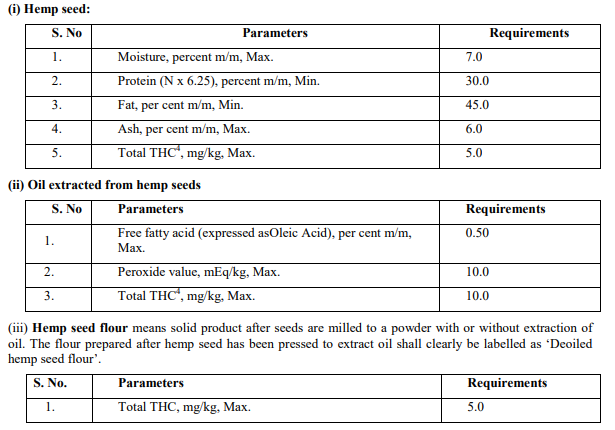
The THC level in food seeds must not exceed 5 mg/kg, and THC content in seed oil must not exceed 10 mg/kg. These strict limits maintain the non-intoxicating nature of hemp food products.
The THC content in hemp seed beverages shall not exceed 0.2 mg/kg, an even stricter standard for liquid consumption products.
"Solid product after seeds are ground to a powder with or without oil extraction," according to the definition of hemp-seed flour. THC concentrations in such goods cannot exceed 5 mg/kg.
CBD levels in hemp seed or seed-based food items are not allowed to exceed 75 mg/kg, regulating the presence of this prominent cannabinoid in food products.
"Any image/representation of the cannabis plant (including the leaf) other than the seeds, nor the words 'cannabis,' 'marijuana,' or words of similar meaning" are prohibited on product labels, as are any nutrition or health claims about CBD. This labeling requirement prevents confusion with intoxicating cannabis products.
These comprehensive regulations create a balanced framework that prioritizes consumer safety while recognizing hemp's nutritional value. The standards align with international best practices while addressing India's specific regulatory concerns. The THC thresholds are particularly important—they ensure that hemp food products remain completely non-intoxicating while allowing the nutritional components to be preserved and utilized effectively.
The labeling restrictions serve a critical purpose: they prevent misleading marketing and ensure consumers understand they are purchasing food products, not medical treatments or psychoactive substances. This clarity is essential for building consumer trust and preventing regulatory confusion that could jeopardize the industry's development.
What is Hemp Oil and How Does It Differ from Cannabis Oil?
Hemp oil is derived from the seeds of the hemp plant, which is a variety of the Cannabis sativa plant species. This distinction is crucial: while hemp and marijuana are both Cannabis sativa varieties, they differ dramatically in their chemical composition and legal status. Unlike marijuana, hemp contains only trace amounts of THC, the psychoactive compound that produces a "high". Therefore, hemp oil does not produce any psychoactive effects and is legal to use under FSSAI regulations.
The key difference lies in the source and composition. Hemp seed oil comes exclusively from pressing hemp seeds—it contains no cannabinoids in significant amounts and is purely a nutritional oil. Cannabis oil, by contrast, may be extracted from the flowers, leaves, and other parts of cannabis plants, potentially containing higher levels of cannabinoids including THC. Hemp seed oil is a food ingredient; cannabis oil is subject to entirely different regulations and controls.
Hemp seed oil is rich in essential fatty acids, including omega-3 and omega-6 fatty acids in an ideal ratio of approximately 3:1, which nutritionists consider optimal for human health. It also contains gamma-linolenic acid (GLA), a beneficial omega-6 fatty acid that may help reduce inflammation. Additionally, hemp oil provides antioxidants, including vitamin E, and other beneficial compounds that can help improve skin health, reduce inflammation, and support cardiovascular wellness.
The cold-pressed extraction method typically used for hemp seed oil preserves these delicate nutrients, making it a valuable addition to smoothies, salad dressings, and wellness routines. Many Indians are incorporating hemp oil into their traditional diets as a modern superfood that complements our heritage of using nutrient-dense seeds and oils like sesame, flax, and mustard.
Hemp seed oil has a distinctive nutty flavor profile that works well in both traditional and contemporary Indian cuisine. It can be drizzled over salads, mixed into chutneys, added to smoothies, or used as a finishing oil for various dishes. Because it has a relatively low smoke point, it's best used in no-heat or low-heat applications to preserve its nutritional integrity.
What are Hemp Seed Products and Their Nutritional Profile?
Hemp seeds are also derived from the hemp plant and are often used in a variety of food products, including hemp milk, hemp protein powder, hemp seed butter, and hemp seed oil. Like hemp oil, hemp seeds contain essential fatty acids and other beneficial compounds that can support overall health and wellness.
Hemp seed products have gained tremendous popularity among health enthusiasts, fitness professionals, and those following plant-based diets due to their exceptional nutritional benefits. They are an excellent source of complete protein, containing all nine essential amino acids, which is rare among plant-based protein sources. A typical serving of hemp seeds provides approximately 9-10 grams of easily digestible protein.
Beyond protein, hemp seeds are rich in vitamins and minerals, including vitamin E (a powerful antioxidant), iron (essential for oxygen transport), magnesium (important for muscle and nerve function), phosphorus (crucial for bone health), potassium, and zinc. They also contain fiber, which supports digestive health and helps maintain stable blood sugar levels.
Hemp seeds offer several notable health advantages, including potentially lowering the risk of heart disease due to their balanced omega fatty acid profile, treating skin conditions like eczema through their anti-inflammatory properties, providing a healthy source of plant-based protein for vegetarians and vegans, potentially easing PMS and menopausal symptoms, and improving digestion through their fiber content.
How to Use Hemp Seeds in Your Daily Diet
Hemp seeds are remarkably versatile and can be incorporated into numerous dishes. Whole hemp seeds can be sprinkled over breakfast porridge, yogurt, or smoothie bowls. They add a pleasant nutty crunch to salads, raitas, and mixed vegetable dishes. Hemp seed powder blends seamlessly into protein shakes, lassis, and baked goods like chapatis, parathas, or healthy muffins.
For those following traditional Indian diets, hemp seeds can complement other protein-rich foods like dal, paneer, and legumes, helping to create nutritionally complete meals. They're particularly valuable for vegetarians and vegans who need to ensure adequate protein intake from diverse plant sources. Hemp protein powder has become especially popular among fitness enthusiasts and athletes looking for clean, plant-based protein supplements.
FSSAI Recognition: A Milestone for Hemp in India
The Food Safety and Standards Authority of India (FSSAI) has officially recognized hemp oil and seed products as food ingredients, representing a significant shift in how India views this ancient crop. This means that hemp seed products can now be used in food products, subject to the specific regulations outlined above.
According to FSSAI guidelines, hemp seed products can be used as an ingredient in food products as long as the THC content does not exceed the specified limits. The products must also be labeled as "not for medical use" and must not make any health claims, particularly regarding CBD content. This ensures that consumers understand they are purchasing food products, not medicines.
The recognition of hemp oil and seed products by FSSAI is a positive step towards promoting the use of these products in India and aligning with global trends in functional foods. With their numerous health benefits and sustainability advantages, hemp oil and seed products have the potential to become a popular ingredient in a variety of food products, from nutrition bars and smoothie mixes to cooking oils and bakery products.
This regulatory clarity has already begun to energize India's food and wellness industries. Entrepreneurs and established food companies are exploring innovative ways to incorporate hemp seeds into products that resonate with Indian consumers. From hemp-fortified atta and multigrain flours to hemp-based energy bars and nutritional beverages, the possibilities are expanding rapidly.
What Products Are Now Permitted?
Hemp seeds, hemp seed oil, and hemp seed flour are now regulated to be:
Sold directly as food products in their own right, allowing consumers to purchase whole hemp seeds, hemp oil, or hemp flour for home use.
Used as a component in commercially available food products, enabling food manufacturers to incorporate hemp ingredients into packaged foods, beverages, and nutritional supplements.
This dual approach allows both direct consumer access and industry innovation, fostering a diverse hemp food ecosystem in India. Consumers can now find hemp products in health food stores, online wellness platforms, and increasingly in mainstream retail outlets. The availability of both raw ingredients and finished products ensures that hemp's benefits are accessible to diverse consumer segments with varying preferences and usage patterns.
The Broader Context: Global Recognition of Hemp's Potential
India's FSSAI is not alone in recognizing hemp's potential. Regulatory authorities worldwide have been evaluating cannabis and cannabis-derived substances, acknowledging the many people who are interested in learning more about their potential benefits. However, regulators globally remain cautious about unsubstantiated health claims and ensure that products meet safety standards.
International food safety authorities recognize the potential benefits that hemp-derived substances may provide, while also maintaining vigilance against illegal marketing practices that could put consumers' health and safety at risk. Regulatory bodies are dedicated to safeguarding public health while also working to improve the efficiency of regulatory procedures for the legal distribution of hemp and hemp-derived products.
This global movement toward hemp recognition reflects growing scientific evidence supporting its nutritional value and a broader acceptance of plant-based wellness solutions. India's progressive stance positions the country to participate in the expanding global hemp food market while protecting consumers through robust safety standards.
Countries across North America, Europe, and Asia-Pacific have established their own regulatory frameworks for hemp foods, with varying THC thresholds and labeling requirements. India's approach, while unique in some aspects, demonstrates alignment with international best practices. This harmonization is crucial for potential export opportunities and for learning from the experiences of more mature hemp food markets.
Hemp and Indian Wellness Traditions
Interestingly, hemp's use in India is not new—it has deep historical roots in traditional wellness practices. Ancient Ayurvedic texts reference hemp seeds as a nutritious food, and the plant has been cultivated in India for centuries in regions like Uttarakhand, Himachal Pradesh, and parts of the Northeast. FSSAI's recognition represents a modern validation of this traditional knowledge, bridging ancient wisdom with contemporary nutritional science.
In traditional Indian culture, hemp seeds were valued not just as food but as a source of nutritious oil and fiber. Rural communities in the Himalayan region have long incorporated hemp seeds into their diets, recognizing their ability to provide sustained energy and nourishment in challenging climatic conditions. This traditional knowledge, passed down through generations, is now being rediscovered and validated by modern nutritional science.
For Indian consumers seeking natural, plant-based wellness solutions that align with traditional values, hemp seeds and oil offer a scientifically validated option that honors our heritage while meeting modern nutritional needs. As awareness grows, hemp products are increasingly found alongside other traditional superfoods in Indian households.
The revival of hemp in India also carries significant economic potential for farmers, particularly in hilly and mountainous regions where hemp cultivation has historical precedence. Hemp is a resilient crop that requires minimal pesticides, grows in diverse soil conditions, and has potential applications beyond food—including textiles, biofuels, and construction materials. The FSSAI recognition for food use may catalyze broader agricultural and industrial development around hemp.
Sustainability and Environmental Benefits of Hemp
Beyond its nutritional profile, hemp deserves recognition for its remarkable sustainability credentials. Hemp plants grow rapidly, reaching maturity in just 3-4 months. They require significantly less water than many conventional crops and naturally suppress weeds, reducing the need for herbicides. Hemp's deep root system helps prevent soil erosion and improves soil health by returning nutrients to the earth.
As India faces increasing environmental challenges including water scarcity and soil degradation, crops like hemp offer promising alternatives that can support both agricultural sustainability and nutritional security. For environmentally conscious consumers, choosing hemp products represents a choice that benefits both personal wellness and planetary health.
Choosing Quality Hemp Products in India
As the Indian hemp market develops, consumers should be mindful of product quality and regulatory compliance. Look for products that clearly display FSSAI certification or licensing information. Reputable brands will provide transparent information about sourcing, testing, and THC content verification.
Quality hemp seeds should have a fresh, slightly nutty aroma without any rancid smell. Hemp oil should be stored in dark, airtight containers and kept in cool conditions to prevent oxidation. Check packaging dates and consume products within their recommended shelf life to ensure maximum nutritional benefit and flavor quality.
When purchasing hemp products online or in stores, verify that the seller is reputable and that products comply with all FSSAI regulations. Avoid products making exaggerated health claims or those that fail to provide clear ingredient and nutritional information. Quality suppliers will be transparent about their sourcing, processing methods, and compliance with regulatory standards.
Conclusion: A New Chapter for Hemp in India
In conclusion, hemp oil and seed products are a rich source of essential fatty acids, complete plant-based protein, antioxidants, vitamins, minerals, and other beneficial compounds that can support overall health and wellness. With their recent recognition by FSSAI through the Food Safety and Standards (Food Products Standards and Food Additives) Fifth Amendment Regulations, 2021, these products have the potential to become a popular and valuable ingredient in a variety of food products across India.
The establishment of clear regulatory standards ensures that consumers can access hemp food products with confidence, knowing they meet rigorous safety requirements. As the Indian hemp industry develops under this framework, we can expect innovation in product development, increased consumer awareness, and broader availability of these nutritious plant-based foods.
This recognition represents more than just regulatory approval—it signals a cultural shift in how India views plant-based wellness solutions. Hemp's journey from traditional use to modern regulatory acceptance demonstrates the value of evidence-based policy that honors heritage while embracing scientific validation. As awareness continues to grow, hemp has the potential to become a mainstream nutritional ingredient that benefits consumers, farmers, entrepreneurs, and the environment alike.
If you are interested in incorporating hemp seed products into your diet, we recommend consulting with a healthcare professional or qualified nutritionist first, especially if you have specific health concerns or dietary requirements. Additionally, it is important to purchase products from a reputable source that follows all necessary FSSAI regulations and maintains high quality standards, ensuring you receive genuine, compliant hemp products that deliver the nutritional benefits you're seeking.
Medical Disclaimer: The information provided in this article is for educational purposes only and is not intended as medical advice. Hemp seed products are food ingredients and should not be used to diagnose, treat, cure, or prevent any disease. Always consult with a qualified healthcare professional before making significant changes to your diet or wellness routine.
?Frequently Asked Questions
What did FSSAI recognise about hemp in 2021?
What are the THC limits for hemp foods in India?
Can hemp food labels show a cannabis leaf or CBD health claims?
How is hemp seed oil different from cannabis oil?
Is hemp seed oil allowed as food in India?
How can hemp seed oil be used in cooking?
Share this article
Written by
THC Store Team
Published 44 months ago


